Introduction#
I have done this trip more times than I can count — sometimes as a quick day out, sometimes for long weekends. Budapest is one of the most extraordinary cities in Europe, and from Vienna it is practically next door. The distance between the two capitals is just 240 kilometres, and the train covers it faster than you can finish a good book.
The two cities have a shared history that runs deep. They were the twin capitals of the Austro-Hungarian Empire until 1918, and the architectural echoes are unmistakable. Vienna has the Ringstrasse; Budapest has Andrássy Avenue. Vienna has the Staatsoper; Budapest has the Hungarian State Opera. Rivals and siblings at the same time. Going between them feels less like international travel and more like visiting a particularly impressive relation you do not see often enough.
This guide covers every way to make the trip, gives you an honest take on whether a day trip is worth it, and tells you what to do with your time once you arrive. All prices are current as of 2026.
For more options on leaving Vienna for the day, see my best day trips from Vienna guide.
Day Trip or Overnight? (Honest Assessment)#
Let me answer this properly before anything else, because it shapes every other decision you make.
The case for a day trip#
A day trip from Vienna to Budapest is realistic and enjoyable. You leave Wien Hauptbahnhof at 07:40 and arrive at Budapest Keleti by 10:14. That gives you roughly nine hours in the city before the 19:40 return train gets you back to Vienna by 22:14. Nine hours is enough to walk both riverbanks, see Parliament from the outside, climb up to Buda Castle and Fisherman’s Bastion, have a proper sit-down lunch, and perhaps squeeze in an hour at a thermal bath.
You will not feel completely cheated. But you will feel slightly rushed — particularly when you realise how much is still left after dinner and how good the ruin bars look as the sun goes down.
The case for overnight#
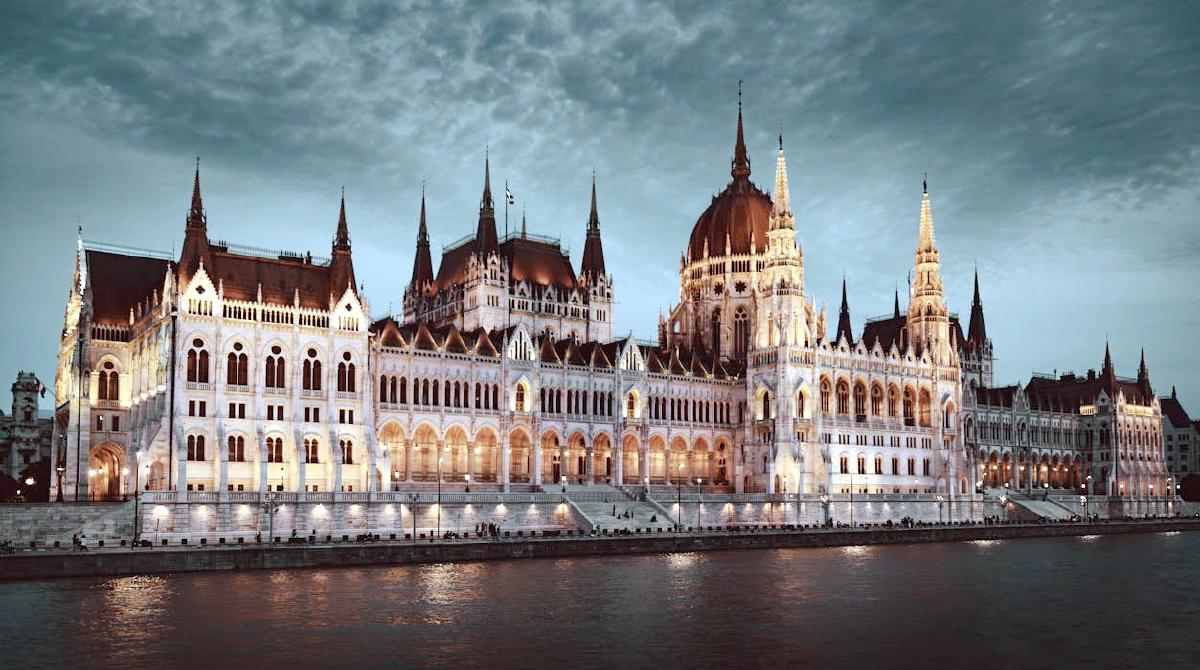
Budapest is one of the rare cities that looks better at night than during the day. The Parliament building lit up across the Danube is one of the most beautiful things I have ever seen in Central Europe. The ruin bars in the Jewish Quarter — the most distinctive nightlife scene in the region — do not warm up until 21:00. And the city’s thermal bath culture, which deserves at least half a day of serious attention, competes directly with your sightseeing time during a day trip.
One night in Budapest costs EUR 40-90 for a decent hotel or EUR 20-35 for a hostel. That is genuinely cheap by Western European standards, and it buys you the relaxed pace the city rewards. If you can stay overnight, do it. If not, the day trip is still one of the best things you can do from Vienna.
My verdict: Day trip if time is your main constraint. Overnight if you want to actually experience Budapest rather than just visit it.
Transport Options Compared#
| Option | Travel Time | Cost (one-way) | Flexibility | Best For |
|---|---|---|---|---|
| ÖBB Railjet (train) | 2h 30min | EUR 19–39 (Sparschiene) / EUR 49.90 standard | High | Most visitors |
| FlixBus | 2h 45min–3h 30min | EUR 5–18 | Low (fixed schedule) | Budget travellers |
| RegioJet (bus) | 2h 45min | EUR 8–20 | Medium | Budget + comfort |
| Organized day tour | ~3h each way | EUR 60–110 per person | Very low | Hassle-free visitors |
| Driving | 2h 45min–3h | EUR 50–80 (fuel + tolls) | High | Families, multi-stop trips |
The train is the clear winner for most people: fastest, most comfortable, and not much more expensive than the bus once you factor in the time saved.
Option 1: Train (Recommended)#
ÖBB Railjet — the fastest and most comfortable option#
The ÖBB Railjet runs directly between Wien Hauptbahnhof and Budapest-Keleti Pályaudvar (Keleti Station) with no changes required. The journey takes approximately 2 hours 30 minutes depending on the specific service. Trains run several times daily, with the most useful departures for a day trip leaving Vienna between 07:00 and 09:00.
| Detail | Info |
|---|---|
| Route | Wien Hauptbahnhof → Budapest-Keleti |
| Train type | ÖBB Railjet (direct) |
| Duration | 2 hours 27–40 minutes |
| Frequency | 5–6 trains daily |
| Sparschiene price | EUR 19–39 one-way |
| Standard price | EUR 49.90 one-way |
| Book at | oebb.at or ÖBB app |
Note that this is an international train crossing from Austria into Hungary, so you will need your passport or EU identity card. There are no border checks on the train itself (the journey is seamless), but you need valid ID for the ticket.
Recommended day trip train schedule#
| Train | Depart Vienna | Arrive Budapest | Return | Depart Budapest | Arrive Vienna |
|---|---|---|---|---|---|
| Early | 07:40 | 10:14 | Evening | 19:40 | 22:14 |
| Mid-morning | 09:40 | 12:14 | Late evening | 21:40 | 00:14+1 |
The 07:40 departure is the one to take for a day trip. Arriving just after 10:00 gives you a full nine hours before you need to think about the return. The 09:40 departure is fine for an overnight stay but makes for a rushed day trip.
How to book cheap tickets#
ÖBB’s Sparschiene fares are the key to cheap tickets. These discounted fares are released well in advance and are tied to specific trains:
- EUR 19–25 one-way if you book 4–8 weeks ahead
- EUR 25–35 one-way if you book 2–4 weeks ahead
- EUR 35–39 one-way if you book 1–2 weeks ahead
- EUR 49.90 standard fare (available any time, including on the day)
You can also book through MAV (Hungarian State Railways), which sometimes shows slightly different availability and prices, though ÖBB’s system is easier to navigate in English.
At Budapest Keleti#
Budapest-Keleti is a grand 19th-century station about 3 kilometres east of the city centre. The metro (M2 line, red line) departs from directly beneath the station and takes about 10 minutes to Deák Ferenc tér, the central interchange. A single metro ticket costs 450 HUF (about EUR 1.15). Taxis are available but negotiate the price or use a metered cab — gypsy cabs at major tourist stations are a known issue in Budapest.
Option 2: Bus (Budget Option)#
FlixBus and RegioJet#
Both FlixBus and RegioJet operate direct bus services between Vienna and Budapest. These are the cheapest transport options but sacrifice speed and flexibility.
| Operator | Depart Vienna | Duration | Price (one-way) | Book at |
|---|---|---|---|---|
| FlixBus | Various (multiple daily) | 2h 45min–3h 30min | EUR 5–18 | flixbus.com |
| RegioJet | Multiple daily | 2h 45min | EUR 8–20 | regiojet.com |
FlixBus departs from Vienna’s main bus terminal at Erdberg (U3 subway station). Prices are cheap but the experience varies — seats are comfortable enough for a 3-hour ride, but schedules are less reliable than the train.
RegioJet is the better bus option. Their coaches are consistently well-maintained with entertainment screens, free coffee on some routes, and attentive staff. The journey time is similar to FlixBus but the experience is noticeably better. RegioJet also departs from Erdberg.
The honest trade-off: The bus saves you EUR 10–20 per person compared to a Sparschiene train ticket, but takes 20–60 minutes longer each way. For a day trip where time is already tight, the bus is not the obvious choice unless your budget is the primary constraint.
Option 3: Organized Day Tour#
For those who want hassle-free travel#
Organized day tours from Vienna to Budapest exist and are worth considering in specific circumstances. They include return coach transport and a guide for the main sights, typically departing around 07:00–08:00 and returning by 22:00–23:00.
| Detail | Info |
|---|---|
| Duration | 14–16 hours total (including travel) |
| Price | EUR 60–110 per person |
| Includes | Return transport, guide, some entrance fees |
| Free time in Budapest | 5–6 hours |
| Pickup | Central Vienna hotels (varies by operator) |
Tours make sense if:
- You do not want to deal with international train tickets and schedules
- You want a guide who explains the history as you go
- You are travelling solo and want the group experience
Tours do not make sense if:
- You want flexibility to explore at your own pace
- You want more than 5–6 hours of free time
- You want to visit thermal baths (there is never enough time on a tour)
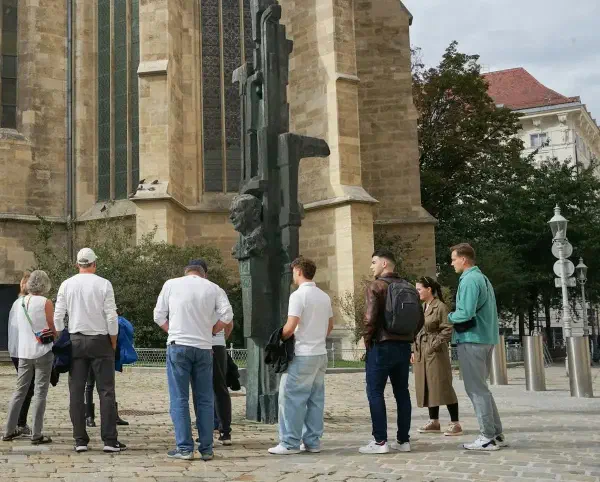
Budapest Day Trip from Vienna
Organized day tours from Vienna to Budapest include return coach transport and a guide for the main sights, departing around 07:00–08:00 and returning by 22:00–23:00 with roughly 5–6 hours of free time in the city.
Day Trip Itinerary: What to Do in 8–9 Hours#
This itinerary assumes you take the 07:40 train and arrive at Keleti by 10:15, then depart at 19:40. You have roughly 9 hours. It is tight but entirely doable.
Morning (10:15–13:00): Pest side#
Take the M2 metro two stops to Kossuth tér. You emerge directly in front of the Hungarian Parliament Building.
Hungarian Parliament (Országház)
One of the largest parliament buildings in the world and arguably the most beautiful neo-Gothic building in Central Europe. Tours of the interior run roughly every 30 minutes (EUR 9 for EU citizens, EUR 26 for non-EU); they are worth it for the central staircase, the coronation jewels, and the sheer scale of the interior. Queue early — tours sell out, particularly in summer. Book ahead at parliament.hu.
If you skip the interior tour, at least walk along the Danube embankment to see the Parliament from the river side and photograph the Shoes on the Danube memorial — 60 pairs of iron shoes marking where Jews were shot into the river in 1944–45. Quiet, devastating, and essential.
Andrássy Avenue and Heroes’ Square
A 15-minute walk (or one metro stop on M1, the continent’s oldest underground railway) takes you to Andrássy Avenue, Budapest’s grand boulevard lined with neo-Renaissance palaces. Walk to Heroes’ Square (Hősök tere) at the far end: a vast neo-classical square with a 36-metre column and statues of Hungarian chieftains and kings. Behind it is Városliget (City Park), where the famous Széchenyi thermal baths sit.
Lunch (13:00–14:00): Eat well and eat cheaply#
Hungarian food is considerably cheaper than Vienna, which is one of the unexpected pleasures of crossing the border.
| Restaurant | What to order | Price per person |
|---|---|---|
| Fríkció (District VII) | Hungarian daily specials | EUR 8–12 |
| Kispipa Étterem (District VII) | Traditional goulash, fish soup | EUR 12–16 |
| Central Market Hall food stalls | Lángos, sausage, Tokaji wine | EUR 4–7 |
| Menza (Andrássy út) | Modern Hungarian, great value | EUR 10–15 |
Lángos (deep-fried flatbread with sour cream and cheese) from the Great Market Hall on the Pest riverbank is mandatory if you are on a budget. EUR 2.50 and better than it has any right to be. The Market Hall itself (Központi Vásárcsarnok) is worth a look regardless — it is a spectacular 1897 iron structure and the stalls on the upper floor have better paprika prices than any tourist shop.
Afternoon (14:00–17:30): The Buda side#
Cross the river via the famous Chain Bridge (Széchenyi Lánchíd) on foot — about 20 minutes from the Market Hall — or take the M4 metro to Fővám tér and the tram to Clark Ádám tér (the bridge’s Buda end).
Buda Castle and the Royal Palace
From Clark Ádám tér, take the Castle Funicular up to the Castle Hill (return ticket: 1,200 HUF / about EUR 3.10, or walk up via the steep path in about 20 minutes). The Royal Palace complex houses the Hungarian National Gallery and the Castle Museum. Both are interesting; on a day trip, skip the museums and walk the Castle District instead.
The Castle District is a compact UNESCO-listed neighbourhood of baroque palaces, cobblestone lanes, and medieval ruins. The Holy Trinity Column, Matthias Church, and the winding streets between them take about 45 minutes to explore properly.
Fisherman’s Bastion (Halászbástya)
Walk from the Royal Palace to Fisherman’s Bastion — about 10 minutes through the Castle District. This neo-Romanesque terrace is the single best viewpoint in Budapest: seven stone towers overlooking the Danube, the Chain Bridge, and Parliament directly across the water. Entry to the upper terrace costs 1,500 HUF (about EUR 3.80) and is worth every forint for the photographs alone. The lower terrace is free.
Late afternoon (17:30–19:00): The Jewish Quarter#
Head back to the Pest side and explore the Jewish Quarter (District VII) around Dohány Street Synagogue. The Great Synagogue (Dohány utcai Zsinagóga) is the largest in Europe and one of the most striking buildings in Budapest, with its Moorish twin towers. Entry is EUR 8. The synagogue closes relatively early, so check current hours before you go.
The surrounding streets — Kazinczy utca, Rumbach utca, Király utca — are where the ruin bars live. The most famous is Szimpla Kert, which opens by 16:00 and is worth a quick beer even in the early evening. The full ruin bar experience comes later in the night, which is exactly why an overnight stay is worth it.
Return (19:40 train)#
Allow 35–40 minutes from the Jewish Quarter to Keleti Station. Take the M2 metro from Deák Ferenc tér (change from M1 at Deák or walk — they are the same square). Buy a drink for the train.
Overnight Itinerary: What You Gain With a Night#
If you stay overnight, here is what becomes possible:
Day 1 evening:
- Sunset from Fisherman’s Bastion (more time, less rushing)
- Dinner at a proper Hungarian restaurant — try Borkonyha (awarded a Michelin star) or Costes if you want to spend, or Kéhli Vendéglő for traditional food done properly without tourist pricing
- Ruin bars from 21:00 — Szimpla Kert, Instant, Fogas House. These are genuinely unique; nothing in Vienna, or most of Europe, looks or feels quite like them
Day 2 morning:
- Thermal bath breakfast — The Széchenyi Baths open at 06:00. Spending 1.5–2 hours soaking in the outdoor pools of a 1913 baroque bathhouse, surrounded by chess-playing old men and pigeons, costs EUR 22 for a day pass. It is one of the most pleasurable two hours you can spend in Hungary.
- A slower walk through the Castle District with fewer tourists
- The Great Market Hall without the lunchtime rush
- Catch the 13:40 or 15:40 train back to Vienna — either gets you home for the evening
One night in Budapest genuinely doubles what you experience. Particularly the thermal baths and the ruin bars — both require time you simply do not have on a single day.
Money and Practical Tips#
Hungarian Forint vs. card#
Hungary uses the Hungarian Forint (HUF), not the euro. As of early 2026, EUR 1 = approximately 390–410 HUF.
Cards: Budapest is significantly more card-friendly than it was five years ago. Most restaurants, museums, and shops accept Visa and Mastercard. Markets and street food stalls are often cash-only.
Cash: Bring EUR 30–50 or withdraw HUF from an ATM at Keleti Station. Use ATMs that belong to actual banks (OTP, Raiffeisen, K&H) rather than standalone machines with high conversion fees. Never use exchange bureaux at the station that advertise “0% commission” — they apply terrible rates instead.
Everything is cheaper than Vienna#
This is the other thing worth understanding before you go. Budapest is genuinely cheap compared to Vienna:
| Item | Vienna | Budapest |
|---|---|---|
| Coffee (flat white) | EUR 4.50–5.50 | EUR 2.20–3.00 |
| Lunch (main + drink) | EUR 15–25 | EUR 7–14 |
| Museum entry (major) | EUR 16–21 | EUR 5–12 |
| Beer (0.5L, bar) | EUR 5–7 | EUR 1.80–3.50 |
| Thermal bath (full day) | N/A | EUR 18–26 |
Even accounting for the train fare, a day in Budapest can cost less than a day in Vienna if you eat and drink locally rather than in tourist hotspots.
Practical information#
- Passport: Required for non-EU citizens. EU citizens need an ID card. Have it accessible on the train — though immigration checks are rare, they do occasionally happen on international services.
- Language: Hungarian is famously difficult. English is widely spoken in tourist areas and by younger Budapestians, but a “köszönöm” (kuh-SUH-nom, “thank you”) goes a long way.
- Getting around: Budapest’s public transport is excellent. A single ticket costs 450 HUF (EUR 1.15) and covers one metro, tram, or bus journey. A 24-hour pass costs 2,500 HUF (EUR 6.30). Buy from machines at metro stations — they have English menus.
- Budapest Card: The Budapest Card (EUR 33 for 24 hours) includes unlimited public transport, free entry to some museums, and discounts at others. Worth it for an overnight stay, marginal for a day trip depending on your plans.
Is It Worth It?#
Budapest is one of the best decisions you can make from Vienna. The combination of dramatic architecture, thermal bath culture, excellent food, and nightlife that genuinely earns its reputation makes it a destination that rewards any amount of time you give it.
For a day trip: yes, absolutely worth it. You see a remarkable city in a single day, at a fraction of what similar-quality cities in Western Europe cost to visit. The train ride is comfortable, the logistics are simple, and you come back feeling like you actually went somewhere rather than just strolled around a museum.
For an overnight stay: it goes from “worth it” to “one of the best short trips in Central Europe.” The ruin bars, the thermal baths, the sunset from Fisherman’s Bastion without checking your watch — these push Budapest into genuinely memorable territory.
If you are comparing it to the other main day trip option from Vienna — Salzburg — Budapest is a different kind of experience. Salzburg is more picturesque and tighter; Budapest is grander, cheaper, and more surprising. See my Vienna to Salzburg day trip guide for that comparison in full.
Plan Your Vienna Trip#
- More day trips: Best Day Trips from Vienna
- Vienna itinerary: 3-Day Vienna Itinerary
- Getting to Vienna: Vienna Airport to City Center
- Vienna on a budget: Vienna on a Budget
Take the 07:40 train. Have a lángos at the Market Hall. Watch the light fall on Parliament from Fisherman’s Bastion. If you can stay the night, do it. If you cannot, come back.
Frequently Asked Questions#
Is a day trip from Vienna to Budapest worth it?#
Yes, absolutely worth it. The ÖBB Railjet train takes just 2 hours 30 minutes each way, giving you 8-9 hours in Budapest on the 07:40 departure. In a single day you can see Parliament, Buda Castle, Fisherman’s Bastion, and the Jewish Quarter. Overnight is better if you have the flexibility, but the day trip is one of the best excursions you can do from Vienna.
How long is the train from Vienna to Budapest?#
The ÖBB Railjet direct train takes 2 hours 27-40 minutes from Wien Hauptbahnhof to Budapest-Keleti. Trains run 5-6 times daily. For a day trip, the 07:40 departure is the one to take — you arrive at 10:14 and have roughly nine hours before the 19:40 return train.
How much does a Vienna to Budapest train ticket cost?#
Sparschiene discounted fares start at EUR 19-25 one-way if booked 4-8 weeks ahead, rising to EUR 35-39 one to two weeks before travel. The standard flexible fare is EUR 49.90. For a day trip, book a Sparschiene ticket for the morning train and a flexible standard fare for the return, costing around EUR 65-80 total.
Is the Vienna to Budapest day trip worth it in 2026?#
Yes, it remains one of the best day trips in Central Europe in 2026. Train fares start at EUR 19 one-way with a Sparschiene booking, Budapest is significantly cheaper than Vienna (coffee EUR 2.20, lunch EUR 7-14, beer EUR 1.80-3.50), and the city’s architecture, thermal baths, and Jewish Quarter make it a genuinely rewarding destination for any length of stay.
What is the cheapest way to get from Vienna to Budapest in 2026?#
FlixBus and RegioJet are the cheapest options at EUR 5-20 one-way, departing from the Erdberg bus terminal (U3 metro). However, the journey takes 2h 45min to 3h 30min. ÖBB Railjet Sparschiene fares start at EUR 19 and save you 30-60 minutes each way — well worth the small extra cost on a tight day trip.
Should I do Vienna to Budapest as a day trip or overnight stay in 2026?#
If you have one spare night, staying over is strongly recommended. A decent hotel in Budapest costs EUR 40-90 per night — much cheaper than Vienna — and it opens up the ruin bars in the Jewish Quarter (best from 21:00), an early morning session at Széchenyi Baths (open from 06:00, EUR 22 day pass), and the unforgettable view of Parliament lit up across the Danube after dark. The day trip is excellent; the overnight stay is exceptional.