Introduction#
Vienna’s public transport system is one of the best in Europe. The network is run by Wiener Linien and covers every corner of the city with five U-Bahn (metro) lines, 29 tram routes, and over 120 bus routes, plus the S-Bahn commuter rail within the city zone. Trains run every 2-5 minutes during peak hours, stations are clean and well-signed, and the whole system is integrated — one ticket works on everything.
I almost never drive within Vienna. There is no reason to. The U-Bahn gets you anywhere in the city center within 15 minutes, trams cover the neighborhoods the metro misses, and night buses run on weekends when the U-Bahn does not. If you are visiting Vienna, public transport is not just the cheapest way to get around — it is the fastest and easiest.
This guide covers everything you need: ticket types and prices, how to navigate the U-Bahn, which tram routes are actually useful, the apps you need, and the mistakes tourists commonly make. If you are arriving by air, start with my Vienna airport to city center guide for the best way to get from the airport into town.
Ticket Types & Prices (2026)#
All tickets below are valid on U-Bahn, trams, buses, and S-Bahn within Zone 100 (the entire city of Vienna). You do not need separate tickets for different modes — one ticket covers everything.
Single & Short-Trip Tickets#
| Ticket | Price | Valid For | Best For |
|---|---|---|---|
| Single ticket | EUR 2.40 | One journey, any transfers, one direction | One-off rides |
| Short-trip ticket (Kurzstrecke) | EUR 1.30 | 2 U-Bahn stops or 1 tram/bus zone | Very short hops |
| Day ticket (24-hour) | EUR 8.00 | 24 hours from first validation | 4+ rides in a day |
The single ticket is valid from the moment you validate it until you complete your journey — including all transfers. You can switch between U-Bahn, tram, and bus on one ticket as long as you are traveling in one continuous direction. You cannot interrupt your journey (no stopping to shop and then continuing on the same ticket).
The short-trip ticket covers 2 stops on the U-Bahn or a short tram/bus ride within one fare zone. It is useful for quick hops — like Stephansplatz to Karlsplatz — but for anything longer, the single ticket is better value.
Multi-Day Passes#
| Pass | Price | Valid For | Break-Even |
|---|---|---|---|
| 24-hour pass | EUR 8.00 | 24 hours from validation | 4 single rides |
| 48-hour pass | EUR 14.10 | 48 hours from validation | 6 single rides |
| 72-hour pass | EUR 17.10 | 72 hours from validation | 8 single rides |
| Weekly pass | EUR 17.10 | Mon 00:00 to Mon 09:00 | 8 single rides |
The 72-hour pass is the best deal for most tourists. At EUR 17.10, it costs the same as the weekly pass but starts from the moment you validate it rather than requiring a Monday start. If your trip spans a Monday, the weekly pass gives you more days.
Children & Family Tickets#
| Category | Rule |
|---|---|
| Under 6 | Free on all transport, no ticket needed |
| Under 15 | Free on Sundays, public holidays, and Vienna school holidays |
| Under 15 (other days) | Half-price ticket (EUR 1.20 single) |
| Vienna school holidays | Roughly mid-July through early September, plus Christmas and Easter weeks |
The under-15 free travel policy is generous. Check the Wiener Linien website for exact school holiday dates during your visit.
Where to Buy Tickets#
- Ticket machines — At every U-Bahn station. Available in English, accept cards and cash. The interface is straightforward.
- Wiener Linien app — Download it before your trip. Buy and validate tickets on your phone. No need to carry paper tickets.
- Tobacco shops (Trafik) — Most sell single tickets and short-trip tickets.
- On trams and buses — Single tickets can be bought from the driver (exact change only, EUR 2.60 — slightly more expensive).
- Online — At shop.wienerlinien.at for passes.
Validation — Do Not Forget This#
Paper tickets and passes must be validated (stamped) before your first ride. The blue validation machines are at U-Bahn entrances and on trams/buses. Insert your ticket, it gets stamped with the date and time, and you are good.
Tickets bought on the Wiener Linien app are validated automatically when you activate them.
This matters because Vienna has no turnstiles or gates. The system operates on an honor basis with random ticket inspections. Inspectors board without warning, check everyone, and issue a EUR 105 on-the-spot fine for anyone without a valid, validated ticket. They check trams, U-Bahn carriages, and buses. “I forgot to validate” is not accepted as an excuse — I have seen tourists get fined for this exact reason.
The U-Bahn (Metro): Your Main Tool#
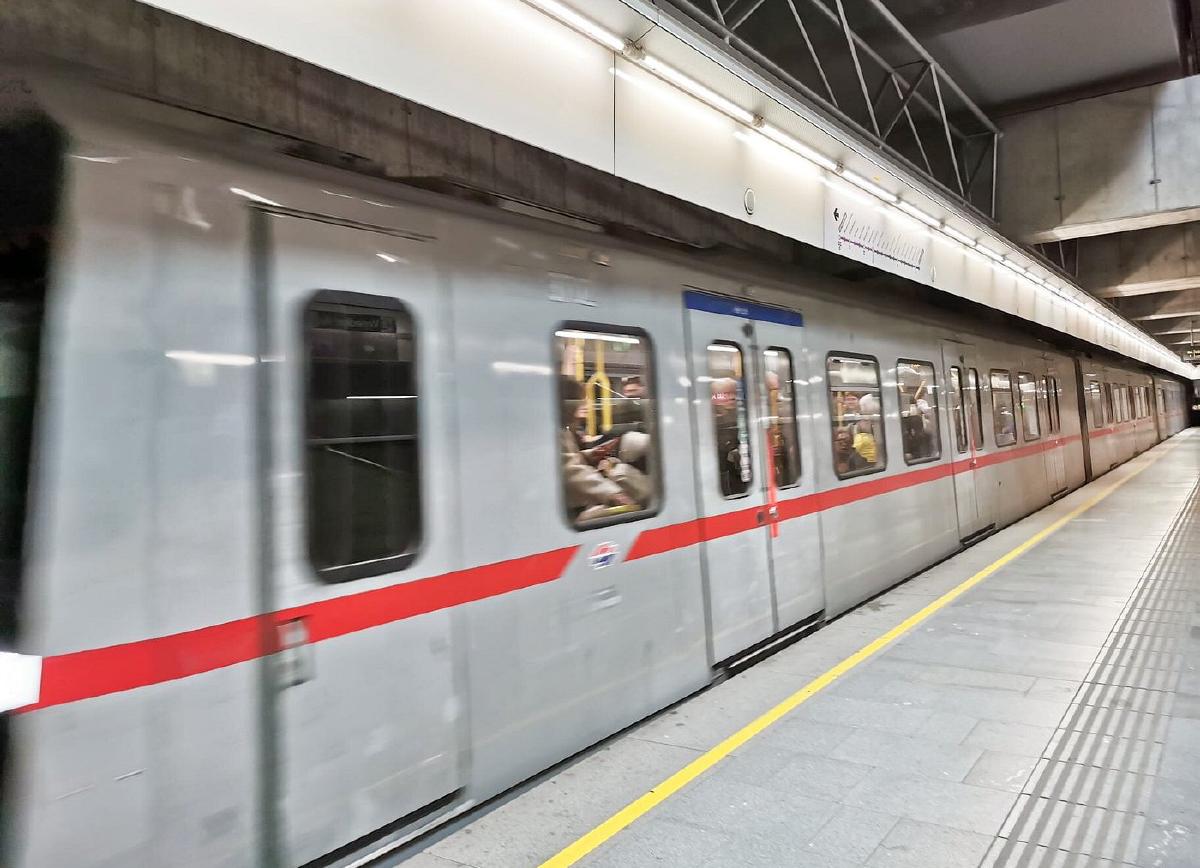
Vienna’s U-Bahn has five lines covering the city. Trains run every 2-5 minutes during rush hour and every 5-8 minutes at other times. Service runs approximately 05:00 to 00:30 on weekdays, and 24 hours on Friday and Saturday nights.
U-Bahn Lines Overview#
| Line | Color | Key Stops | Useful For |
|---|---|---|---|
| U1 | Red | Stephansplatz, Schwedenplatz, Praterstern, Donauinsel, Reumannplatz | Old Town, Prater, Danube Island |
| U2 | Purple | Schottentor, Rathaus, Museumsquartier, Karlsplatz | Museums, City Hall, university area |
| U3 | Orange | Stephansplatz, Herrengasse, Westbahnhof, Volkstheater | Shopping (Mariahilfer Strasse), Old Town |
| U4 | Green | Schwedenplatz, Stadtpark, Karlsplatz, Schoenbrunn, Heiligenstadt | Schoenbrunn, Danube Canal, Naschmarkt |
| U6 | Brown | Westbahnhof, Burggasse-Stadthalle, Floridsdorf | Cross-city connections, Westbahnhof |
Key Routes for Tourists#
Stephansplatz (U1/U3) is the central hub — you can reach most major attractions within 1-2 transfers from here.
| From | To | Route | Time |
|---|---|---|---|
| Stephansplatz | Schoenbrunn Palace | U1 to Karlsplatz, U4 to Schoenbrunn | 15 min |
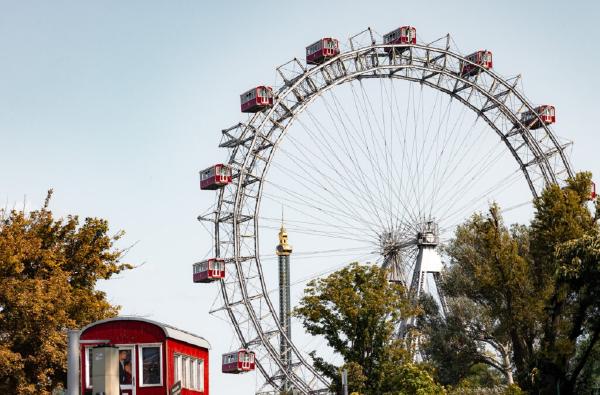
| Stephansplatz | Prater / Ferris Wheel | U1 to Praterstern | 5 min |
| Stephansplatz | MuseumsQuartier | U3 to Volkstheater or U2 to Museumsquartier | 5 min |
| Stephansplatz | Naschmarkt | U1 to Karlsplatz, walk 5 min | 10 min |
| Stephansplatz | Belvedere | U1 to Sudtiroler Platz | 5 min |
| Stephansplatz | Danube Island | U1 to Donauinsel | 10 min |
| Hauptbahnhof | Stephansplatz | U1 direct | 5 min |
| Westbahnhof | Stephansplatz | U3 direct | 10 min |
U-Bahn Tips#
- Follow the direction signs. Platforms are labeled by the end station of the line (e.g., U1 direction Leopoldau or U1 direction Oberlaa). Know which direction you need before going down.
- Stand on the right on escalators. The left side is for walking. Viennese take this seriously.
- Every station has elevators. They are marked on the station maps and work reliably. Essential if you have a stroller or luggage.
- Weekend all-night service starts Friday at 00:30 and runs through Sunday morning. Trains run every 15 minutes on all lines throughout the night.
Trams: The Scenic Option#
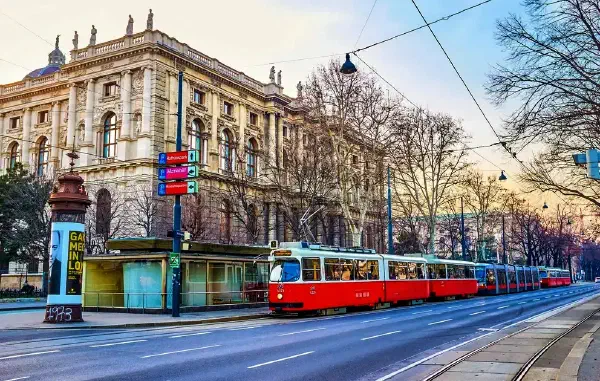
Vienna’s tram network is the fifth-largest in the world, and several routes are genuinely useful for tourists — not just for getting places, but for sightseeing along the way.
Most Useful Tram Routes#
| Route | Key Stops | Why It Is Useful |
|---|---|---|
| Ring Tram (Vienna Ring Tram) | Circles the Ringstrasse | Sightseeing loop past Opera, Parliament, Rathaus, Burgtheater, museums. Tourist tram with audio guide (EUR 12). |
| Tram 1 | Prater -> Ring -> Burgring | Connects Prater to the museum district via the Ring |
| Tram 2 | Ring section + Leopoldstadt | Good for the 2nd district neighborhoods |
| Tram D | Nussdorf -> Ring -> Hauptbahnhof | Connects the wine village of Nussdorf to the center — scenic route |
| Tram 71 | Ring -> Belvedere -> Zentralfriedhof | Goes to the Central Cemetery (Beethoven, Brahms, Strauss graves) |
| Tram 49 | Ring -> Hietzing -> Schoenbrunn area | Alternative route to the Schoenbrunn neighborhood |
How Trams Work#
- Board at any door. Validate your ticket inside (or have your app open).
- Stops are announced in German and shown on screens. Press the button near the doors to request the next stop.
- Most trams are modern low-floor models — easy to board with luggage or strollers.
- Tram stops have real-time arrival displays. The Wiener Linien app also shows live tram positions.
Buses: Filling the Gaps#
Buses cover areas the U-Bahn and trams do not reach. For most tourists, they are less essential, but a few routes are worth knowing:
| Route | Use |
|---|---|
| 13A | Mariahilfer Strasse (main shopping street) to the southern districts |
| 48A | City center to Schoenbrunn (alternative to U4) |
| Bus 38A | Heiligenstadt (U4) to Kahlenberg — the hilltop viewpoint over Vienna and the Danube |
| Night buses (N lines) | Replace U-Bahn routes Sun-Thu after midnight. Routes mirror the U-Bahn lines but run as buses. |
Night Transport#
| Day | Service | Details |
|---|---|---|
| Friday & Saturday nights | U-Bahn runs 24 hours | All 5 lines, every 15 minutes |
| Sunday-Thursday nights | Night buses (N lines) | Replace U-Bahn from ~00:30 to ~05:00, every 30 min |
Night buses run routes that roughly mirror the U-Bahn lines (N25 follows U2, N60 follows U6, etc.). They depart from Schwedenplatz, which functions as the central night bus hub.
The Apps You Need#
1. Wiener Linien App (Essential)#
The official app from Vienna’s transport operator. It does everything:
- Buy and validate tickets (stored on your phone — no paper needed)
- Real-time departure boards for every stop
- Route planning with live delays
- Station maps showing exits and elevator locations
Download this before your trip. It is free and works offline for basic route planning.
2. Google Maps (Backup)#
Google Maps integrates Wiener Linien data and provides reliable route planning with real-time updates. Use it as a backup or if you prefer the Google Maps interface. It does not sell tickets.
3. OBB App (For Day Trips)#
The Austrian Federal Railways app covers trains beyond Vienna — useful for day trips to Salzburg, Wachau, Bratislava, and Hallstatt. Not needed for in-city transport but essential for regional travel. See my Vienna to Salzburg day trip guide for booking tips.
Common Mistakes (And How to Avoid Them)#
1. Not validating your ticket#
The system has no barriers. You must validate your ticket in the blue machines before your first ride. Forgetting costs EUR 105.
2. Buying single tickets for every ride#
If you are taking 4+ rides in a day, the 24-hour pass is cheaper. Most tourists underestimate how often they use transport.
3. Taking taxis when the U-Bahn is faster#
Vienna taxis are expensive (EUR 15-25 for most cross-city trips) and often slower than the U-Bahn due to traffic. The only time a taxi makes sense is for airport transfers with heavy luggage or very late at night on weekdays.
4. Walking when you should ride#
Vienna’s center is walkable, but distances add up. Stephansplatz to Schoenbrunn is 6.5 km — that is a 75-minute walk or a 15-minute U-Bahn ride. Save your energy for the palaces and museums.
5. Missing the airport transport options#
The fastest way from the airport is the S7 train (EUR 2.40 with a Wiener Linien ticket to the city border + EUR 2.40 for the Kernzone, or included in your pass + a small supplement). The CAT train costs EUR 14.90 and saves only a few minutes. Full breakdown in my airport guide.
Vienna City Card vs. Regular Transport Pass#
The Vienna City Card bundles a transport pass with museum and attraction discounts. Is it worth it?
| Feature | 72-hour Transport Pass | Vienna City Card (72h) |
|---|---|---|
| Price | EUR 17.10 | EUR 33.00 |
| Transport | Unlimited Zone 100 | Unlimited Zone 100 |
| Museum discounts | No | 5-25% off at 200+ attractions |
| Skip-the-line | No | At some attractions |
| Worth it if… | You just need transport | You visit 4+ paid attractions |
For most visitors, the regular 72-hour pass is the better deal. The Vienna City Card discounts are typically 10-15% — you need to visit a lot of museums to recoup the EUR 16 difference. I break this down with specific scenarios in my Vienna City Card analysis.
Accessibility#
Vienna’s public transport is highly accessible:
- All U-Bahn stations have elevators and tactile guidance systems.
- All new trams are low-floor with ramp access. Older trams on some routes still have steps.
- Buses have retractable ramps for wheelchair access.
- Audio announcements are on all U-Bahn trains and most trams.
- The Wiener Linien app shows which stations have working elevators (breakdowns are flagged in real time).
For detailed accessibility information, Wiener Linien’s website has station-by-station guides.
Transport to Major Attractions#
Quick reference for the most-visited spots:
| Attraction | Nearest Stop | Line | Walk Time |
|---|---|---|---|
| Stephansdom | Stephansplatz | U1, U3 | 1 min |
| Hofburg Palace | Herrengasse / Volkstheater | U3 | 3 min |
| Schoenbrunn Palace | Schoenbrunn | U4 | 5 min |
| Belvedere Palace | Sudtiroler Platz | U1 | 8 min |
| Prater / Ferris Wheel | Praterstern | U1, U2 | 5 min |
| Naschmarkt | Kettenbruckengasse | U4 | 1 min |
| MuseumsQuartier | Museumsquartier | U2 | 2 min |
| Kunsthistorisches Museum | Museumsquartier / Volkstheater | U2, U3 | 3 min |
| Vienna State Opera | Karlsplatz | U1, U2, U4 | 2 min |
| Danube Island | Donauinsel | U1 | 1 min |
| Hundertwasserhaus | Hetzgasse (Tram 1) or Landstrasse (U3/U4) | Tram 1, U3, U4 | 5-10 min |
| Central Cemetery | Zentralfriedhof (Tram 71) | Tram 71 | 1 min |
Plan the Rest of Your Trip#
- Getting from the airport: Vienna Airport to City Center
- Is the City Card worth it? Vienna City Card Analysis
- Budget planning: Vienna on a Budget
- What to see: 25 Best Things to Do in Vienna
- Full itinerary: 3-Day Vienna Itinerary
- Day trips by train: Best Day Trips from Vienna
Vienna’s transport system is one of the things that makes the city so easy to visit. Buy a 72-hour pass, download the Wiener Linien app, and you can reach every attraction in this guide without ever needing a taxi. That is more than most European capitals can say.
Frequently Asked Questions#
What is the best transport pass for tourists in Vienna?#
For most visitors, the 72-hour pass at EUR 17.10 is the best value. It covers unlimited travel on all U-Bahn, tram, and bus routes within Vienna for 72 hours from first validation. If your stay spans a Monday, the weekly pass at the same price gives you more days of coverage.
How much does a single U-Bahn ticket cost in Vienna?#
A single ticket costs EUR 2.40 and is valid for one continuous journey including all transfers on U-Bahn, trams, and buses. You must validate it in the blue stamping machines before boarding. Buying from the driver on trams costs slightly more at EUR 2.60.
Do children ride free on Vienna public transport?#
Children under 6 always ride free with no ticket needed. Children under 15 ride free on Sundays, public holidays, and Vienna school holidays (roughly mid-July through early September, plus Christmas and Easter weeks). On other days, children under 15 pay half-price — EUR 1.20 for a single ticket.
Is Vienna public transport worth it for tourists in 2026?#
Yes, absolutely. The 72-hour pass costs EUR 17.10 in 2026 and gives unlimited travel across all U-Bahn, tram, and bus lines. Most major attractions are within 15 minutes of Stephansplatz by metro, and trains run every 2-5 minutes during peak hours. This is far faster and cheaper than taxis, which cost EUR 15-25 per cross-city trip.
What is the cheapest way to get around Vienna in 2026?#
The cheapest option for visitors is the 72-hour Wiener Linien pass at EUR 17.10, which covers all transport for three full days. Buy it at U-Bahn station ticket machines or instantly via the free Wiener Linien app. Avoid taxis entirely — they cost EUR 15-25 per trip and are often slower than the metro due to city traffic.
How far in advance should I buy Vienna transport tickets in 2026?#
No advance booking is needed for Vienna public transport. Ticket machines are available at every U-Bahn station around the clock, including at the airport. You can also buy and activate tickets instantly via the Wiener Linien app on your smartphone. Simply validate your ticket or activate your app ticket before your first journey to avoid the EUR 105 fine.