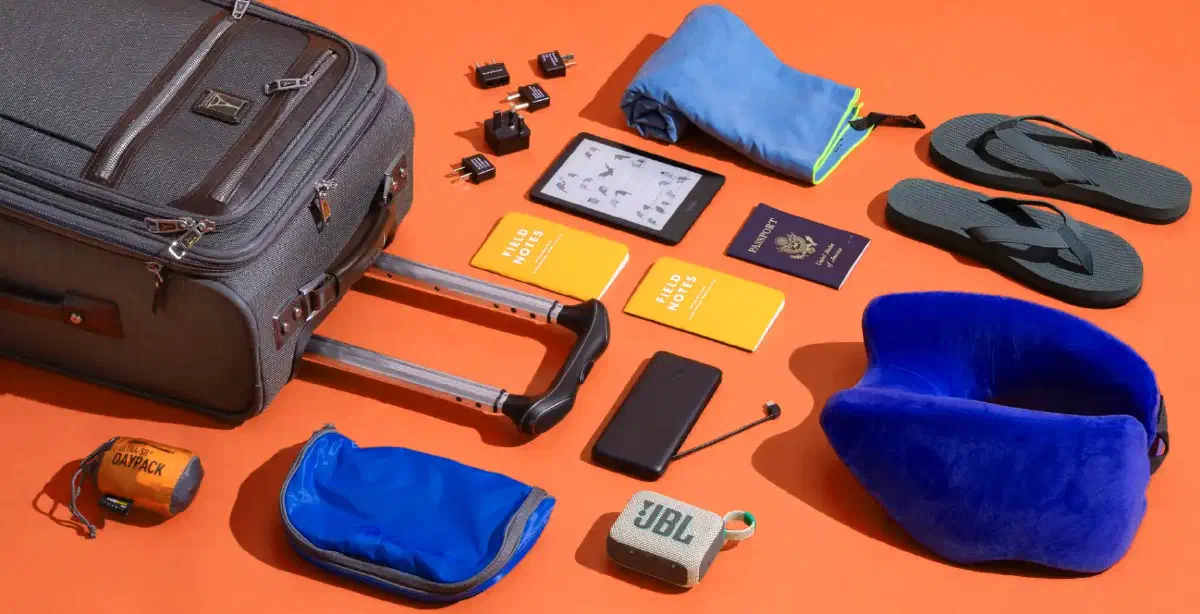
Introduction#
I moved to Vienna over a decade ago and I still hear the same complaints from visitors who packed wrong: blistered feet from stylish-but-useless shoes, soaked jackets from a surprise April downpour, or a dead phone because no one remembered that Austria uses Type F plugs.
Vienna rewards a bit of preparation. It is not a beach destination where you throw some shorts and sunscreen in a bag. It is a city where people dress thoughtfully, walk everywhere, and deal with weather that swings hard between seasons — sometimes within the same week. Pack smart and you will spend your time exploring Schönbrunn and sipping Melange in a Kaffeehaus. Pack wrong and you will spend it limping back to your hotel or hunting for an umbrella.
This guide is organized by what you always need, what changes by season, and what you can safely leave behind. At the bottom you will find a printable checklist you can use before any Vienna trip.
Year-Round Essentials#
These items belong in your bag no matter when you visit.
The Right Power Adapter#
Austria uses Type C and Type F plugs at 230V/50Hz. This is the same standard as most of continental Europe, but it is not compatible with UK or US plugs without an adapter. The voltage difference also matters — charging a US device without a compatible adapter or converter can damage it.
I recommend a universal travel adapter with USB-A and USB-C ports built in, so you are not juggling multiple chargers. A universal travel adapter for Europe (Type C/F) is one of the easiest things to buy in advance and one of the most annoying to track down on arrival.
A Portable Charger#
Vienna’s Innere Stadt (the first district) is dense and walkable, but you will cover serious ground each day. Maps, translation apps, transit navigation, camera — your phone works hard here. A portable charger / power bank in the 10,000–20,000 mAh range will easily get you through a full day without hunting for an outlet.
A Compact Rain Jacket#
Vienna gets rain in every single month of the year. Not torrential tropical rain, but the grey, persistent, comes-out-of-nowhere kind that ruins a day if you are unprepared. A packable rain jacket that stuffs into its own pocket takes up almost no space and saves the trip more than once.
Skip the bulky waterproof parkas unless you are visiting in deep winter. A lightweight shell is enough for three seasons.
A Compact Travel Umbrella#
On days when a rain jacket feels like overkill, a compact travel umbrella handles the job. Viennese people carry them constantly — you will see them everywhere during shoulder season. Opt for a windproof model; the gusts along the Ringstrasse in autumn and spring are strong enough to invert a cheap umbrella.
Packing Cubes#
Not strictly a Vienna-specific item, but I mention them because many visitors to Vienna are doing a broader Europe trip and repacking frequently. Packing cubes compress clothing, keep everything organized, and make it dramatically easier to live out of a suitcase for a week without descending into chaos.
The Shoes Section (Read This Carefully)#
If there is one thing I want to save you from, it is this: Vienna’s old city is paved with cobblestones. Beautiful, historic, absolutely merciless on the wrong footwear.
The Innere Stadt, the areas around the Naschmarkt, the paths through the Burggarten — all cobbled. And not smooth modern cobblestones either. These are uneven, rounded, centuries-old stones that will destroy your feet in heels, wedges, thin-soled sandals, or any shoe not designed for extended walking.
What to Wear#
You need shoes that do three things simultaneously: they need to look reasonably presentable (Vienna has a dress culture — more on that below), they need to be comfortable for 10–15km of walking per day, and they need to handle uneven surfaces without causing ankle injuries.
The best options I have seen work well:
- Leather or faux-leather walking shoes — the kind that look like smart casual shoes but have real cushioning inside. Think Ecco, Clarks, or similar. They pass the “no trainers in the opera” test while keeping your feet intact.
- Clean, minimalist sneakers — white or neutral leather sneakers (think classic low-top styles) are accepted nearly everywhere and work well for casual days. Avoid anything overly sporty or neon-coloured.
- Low-heeled ankle boots — excellent for autumn and spring, look sharp, and handle cobblestones better than stilettos or block heels.
What Not to Wear#
- Flip-flops anywhere except your hotel pool or a spa
- High heels for a full day of sightseeing — you will be in agony by noon
- Brand new shoes you have not broken in — I have watched too many tourists limp through the Kunsthistorisches Museum in shoes that were clearly purchased for this trip
What to Wear in Vienna: Dress Culture#
Vienna is more formal than most European cities, and noticeably more so than Western European capitals like Amsterdam or Lisbon. This is not a city where people wander around in athletic gear unless they are literally exercising.
The Viennese take their appearance seriously. Not in a snobbish way — more in a “we think getting dressed is worth doing properly” way. You will not be turned away from restaurants for wearing jeans, but you will feel out of place in a nice Beisl or a theatre in tracksuit bottoms and a hoodie.
General Dress Guidelines#
- Smart casual is appropriate nearly everywhere: dark jeans, chinos, or trousers; a collared shirt, blouse, or smart top; leather shoes or clean sneakers
- The Vienna State Opera and Burgtheater have no enforced dress code, but locals dress up — a shirt and trousers for men, a dress or smart separates for women is the norm. Check our guide to Vienna opera tickets for more on what to expect
- Museums and coffee houses have no dress code at all, but you will look more at home dressed neatly
- Parks, markets, and outdoor sightseeing are genuinely casual — wear what is comfortable
Spring Packing List (March–May)#
Spring in Vienna is one of my favourite times of year, but it is genuinely unpredictable. March can feel like winter. April swings between warm sunshine and cold rain in the same afternoon. May is usually beautiful but still brings cool evenings. See our full Vienna in spring and summer guide for what the city is like this time of year.
What to Pack for Spring#
- Layering pieces — a lightweight base layer, a mid-layer (thin jumper or long-sleeve shirt), and your rain jacket covers almost everything March through May throws at you
- One warmer layer — a light down jacket or wool layer for March and early April evenings, which can drop to 3–8°C
- A mix of trousers and lighter bottoms — jeans plus one pair of chinos or smart trousers works well
- Comfortable walking shoes as described above
- A scarf — useful right through May for the wind
Summer Packing List (June–August)#
Vienna summers are warm and often genuinely hot. July and August regularly see temperatures of 30–35°C, and the city gets humid. But evenings cool down noticeably and the architecture provides shade. Get more detail in our Vienna in summer guide.
What to Pack for Summer#
- Lightweight, breathable clothing — linen, cotton, and moisture-wicking fabrics are your friends. Vienna heat is not dry-desert heat; it is humid European heat that sticks to you
- Shorts and light trousers — both are fine in summer. Even most restaurants accept shorts in summer
- Sundresses or light dresses — practical and look smart enough for coffee houses and museums
- Sunglasses and a sun hat — the Prater, Schönbrunn’s gardens, and most outdoor attractions offer limited shade
- Sunscreen — high SPF. The UV index in Vienna in July is higher than most visitors expect
- One layer for evenings and air-conditioned spaces — a light cardigan or thin long-sleeve shirt. Museums and some restaurants crank the air conditioning aggressively
- Your rain jacket — summer thunderstorms in Vienna are sudden and heavy. A packable shell still earns its place in the bag
Autumn Packing List (September–November)#
Autumn is arguably the best time to visit Vienna. September is warm and golden, October is beautiful with coloured leaves in the Prater and along the Ringstrasse, and November gets cold and begins to feel like the approach of winter. For the Christmas market season that begins in November, see our Vienna Christmas markets guide.
What to Pack for Autumn#
- A proper mid-weight jacket — a wool or wool-blend coat, or a down jacket, depending on when in autumn you visit. September needs a light layer; November needs something genuinely warm
- Jumpers and long-sleeve layers — you will live in these in October and November
- Waterproof or water-resistant shoes — autumn rain is more persistent than summer storms
- Scarf, gloves (for late October/November) — temperatures in November can drop to 2–5°C at night
- Dark jeans or smart trousers — the wardrobe leans darker in autumn Vienna
Winter Packing List (December–February)#
Vienna winters are cold, grey, and genuinely magical around the Christmas market season. Temperatures regularly drop below freezing, and snow is common in January and February. Read our Vienna in winter guide for everything the season offers.
What to Pack for Winter#
- A proper winter coat — not a fashion coat, not a light down jacket. A real winter coat that handles -5 to -10°C wind chill. The wind along the Ringstrasse in January is brutal
- Thermal base layers — merino wool is excellent. A thin thermal top and leggings under your regular clothes make a dramatic difference
- Warm jumpers / sweaters — at least two
- Waterproof, insulated boots or shoes — snow and slush on cobblestones is genuinely treacherous. Waterproofing matters as much as warmth
- Hat, scarf, and gloves — non-negotiable. Do not assume you will “be fine” without them. You will not
- Wool or thermal socks — your feet will thank you
- Lip balm and hand cream — Vienna winters are dry as well as cold, and both are surprisingly hard to remember until your knuckles crack
Electronics and Tech Checklist#
- Type C/F power adapter (essential — Austrian plugs are incompatible with UK/US)
- Portable charger / power bank
- Phone and charging cable
- Camera (if you bring one) and charger
- Laptop or tablet and charger (if needed)
- Earbuds or headphones (long train rides, the U-Bahn)
- Download offline maps before you arrive — maps.me or Google Maps offline work well in Vienna
What NOT to Pack for Vienna#
Just as important as what to bring is what to leave behind.
Things you can easily buy in Vienna:
- Toiletries — Vienna has DM and Bipa drugstores on nearly every main street, fully stocked and reasonably priced. Do not pack large bottles of shampoo
- Sunscreen — available everywhere in summer
- Over-the-counter medicine — pharmacies (Apotheke) are plentiful and staff speak English
- Snacks — the supermarkets (Billa, Spar, Merkur) are excellent. You do not need to pack food
- Umbrellas — if you forget yours, you can buy a decent one for €10–15 at any supermarket
Things that are unnecessary:
- A guidebook heavier than 300g — everything in this guide and the others on this site covers the practical stuff, and carrying a brick-weight book wastes luggage space
- Multiple pairs of “going out” shoes — one versatile smart pair handles nearly everything Vienna throws at you
- A money belt under your clothes — Vienna is extremely safe and pickpocketing, while not unknown, is not the threat it is in some other European capitals. A standard zipped crossbody or a front-pocket wallet is fine
Things that will make you look like a tourist in the wrong way:
- Matching luggage sets pulled through the Innere Stadt when a day bag would do
- An enormous camera with a zoom lens the size of your forearm for casual sightseeing
- Flip-flops. I said it once. I will say it again. Not in Vienna
Getting to and From Vienna: What to Have on Arrival#
Before you even start worrying about what to wear each day, make sure you have the practical arrival items sorted. Our Vienna airport to city center guide covers transport in detail, but in terms of what to have ready:
- Offline maps downloaded
- Your accommodation address saved somewhere accessible without internet
- Small change or a card for the City Airport Train (CAT) or S-Bahn ticket machine
- A jacket you can access easily — the Vienna airport arrivals hall is air-conditioned
The Complete Vienna Packing Checklist#
Print this or save it to your phone.
Documents and Money#
- Passport (valid for at least 6 months beyond travel dates)
- Travel insurance details
- Accommodation confirmation
- Debit/credit card with low foreign transaction fees
- Some cash in euros (€50–100 for arrival, smaller notes preferred)
Electronics#
- Type C/F travel adapter
- Portable charger / power bank
- Phone and cable
- Camera and charger (if applicable)
- Laptop/tablet and charger (if applicable)
- Earbuds or headphones
Clothing (All Seasons)#
- 5–7 days of underwear and socks
- 2–3 pairs of trousers (jeans, chinos, or smart trousers)
- 4–5 tops (mix of casual and smart casual)
- 1 smart layer (blazer, shirt, or dress for evenings/theatre)
- Comfortable walking shoes (broken in before the trip)
- Compact rain jacket
Add for Spring (Mar–May)#
- Light down or wool jacket for cold evenings
- 2–3 layering pieces (mid-layers, light jumpers)
- Scarf
Add for Summer (Jun–Aug)#
- Shorts or light summer dresses
- Sunglasses
- Sun hat
- High-SPF sunscreen
- Light cardigan for air-conditioned spaces
Add for Autumn (Sep–Nov)#
- Mid-weight jacket or wool coat
- 2–3 jumpers
- Scarf (gloves for late October/November)
- Water-resistant shoes
Add for Winter (Dec–Feb)#
- Heavy winter coat
- Thermal base layers (top and bottom)
- 2–3 warm jumpers
- Waterproof insulated boots or shoes
- Hat, scarf, gloves (all three — non-negotiable)
- Wool or thermal socks
- Lip balm and hand cream
Toiletries (Travel-Size)#
- Toothbrush and toothpaste
- Deodorant
- Shampoo and conditioner (or plan to buy at DM on arrival)
- Basic skincare
- Any prescription medication (with original packaging)
- Pain relief (paracetamol or ibuprofen)
Bag Organisation#
- Packing cubes
- Small day bag or crossbody for sightseeing
- Reusable tote bag (Vienna supermarkets charge for bags)
Frequently Asked Questions#
What should I pack for Vienna?#
The non-negotiables are: comfortable walking shoes broken in before the trip, a compact packable rain jacket, a Type C/F power adapter, and layers appropriate to the season. Vienna’s cobblestoned streets demand proper footwear — anything with thin soles, heels, or no grip will cause trouble by day two. The rain jacket earns its place in every month of the year, as showers can appear without warning even in July.
What is the dress code in Vienna?#
Vienna is noticeably more formal than most European capitals. Smart casual is the baseline almost everywhere: dark jeans or chinos, a collared shirt or smart blouse, and presentable shoes. The Vienna State Opera has no enforced dress code but locals dress up — a blazer and trousers or a dress is the norm. Tracksuit bottoms, athletic gear, and flip-flops are out of place in restaurants, coffee houses, and most cultural venues. Parks and markets are genuinely casual.
Do I need a power adapter for Vienna?#
Yes. Austria uses Type C and Type F plugs at 230V/50Hz, which are not compatible with UK or US plugs without an adapter. A universal travel adapter with built-in USB-A and USB-C ports is the most convenient option. Most modern phones, laptops, and cameras are dual-voltage (check for “100–240V” on the charger brick), meaning you only need a plug adapter and not a separate voltage converter.
What should I pack for Vienna in summer 2026?#
Pack lightweight breathable clothing in linen or cotton, high-SPF sunscreen (the UV index in July is high, especially near water), sunglasses, and a wide-brim sun hat. July and August regularly reach 30 to 35 degrees Celsius with humidity. Include a light cardigan or thin long-sleeve shirt for air-conditioned museums — some run cold. Keep your compact rain jacket accessible at all times; summer thunderstorms in Vienna can be sudden and heavy, with intense rainfall that soaks an unprepared visitor within minutes.
Can I buy toiletries and medication in Vienna in 2026?#
Yes. DM and Bipa drugstores are on nearly every main street throughout the city and are fully stocked with toiletries, cosmetics, and basic healthcare products at competitive prices. Pharmacies (Apotheke) are plentiful and staff generally speak English. There is no need to pack large bottles of shampoo or conditioner, sunscreen, or over-the-counter pain relief. The one exception is any prescription medication, which you should bring in original packaging with a copy of your prescription.
What should I NOT pack for Vienna in 2026?#
The most common mistakes: flip-flops (cobblestones and local dress culture make them impractical everywhere except a hotel pool), large toiletry bottles you can buy on arrival at DM for less than at the airport, heavy printed guidebooks that add weight when offline maps on your phone do the same job, and a money belt under your clothing (Vienna is one of Europe’s safest cities and a standard zipped crossbody bag is sufficient). Multiple pairs of “going out” shoes are also unnecessary — one versatile smart casual pair handles opera, restaurants, and museums.
Final Thoughts#
Vienna is not a complicated city to pack for — it just rewards a bit more thought than a beach holiday. Prioritise your shoes above everything else. Get the adapter. Bring layers even in summer. And whatever month you visit, a packable rain jacket earns its place every single time.
If you are still planning the logistics of your trip, our 3-day Vienna itinerary lays out exactly how to structure your time, and our Vienna on a budget guide covers how to do the city without spending a fortune. For more on Vienna’s weather and what to expect season by season, the Vienna in winter guide and the Vienna in summer guide cover everything in detail.
Pack smart, wear comfortable shoes, and enjoy one of the great cities of Europe.