Introduction#
The Wiener Staatsoper is not just another opera house. It is one of the most important cultural institutions in the world, staging roughly 300 performances per season with a repertoire that rotates almost every night. And unlike many famous venues, it is shockingly accessible — you can stand in one of the most beautiful auditoriums on the planet for less than the price of a coffee at a tourist cafe.
I have attended performances here dozens of times over the years. Some nights in a velvet seat, many nights standing. I have also made every mistake you can make: showed up too late for standing room, booked the wrong seat category, wore the wrong shoes for three hours of standing. This guide covers everything so you skip all of that.
Whether you want the full black-tie experience or you are visiting Vienna on a budget, there is a way to make the opera work for you.
The Vienna State Opera at a Glance#
The building itself opened in 1869 as the first major structure on the Ringstrasse. It was heavily damaged in World War II and rebuilt by 1955. The Neo-Renaissance exterior and the grand staircase survived the bombing; the auditorium was reconstructed with a slightly more modern aesthetic — still opulent, but cleaner than the original.
Today the Wiener Staatsoper operates on a repertory system, meaning they can perform a different opera or ballet almost every night because the sets are stored and rotated. On any given week, you might choose between Verdi, Mozart, Puccini, Strauss, and a contemporary piece. The season runs from September through June, with the famous Opera Ball in February.
Key details:
- Address: Opernring 2, 1010 Wien
- Getting there: U1, U2, U4 to Karlsplatz, then a 2-minute walk. Tram lines 1, 2, D, 62, and 71 stop directly in front.
- Official website: wiener-staatsoper.at
- Season: September to June (closed July–August except for special events)
Ticket Types and Prices (2026 Season)#
The Vienna State Opera uses a category system that can feel confusing at first. Here is the breakdown of what you actually need to know.
Seating Categories Explained#
| Category | Location | Price Range (EUR) | Best For |
|---|---|---|---|
| Parkett (Stalls) | Ground floor, center | EUR 150–300 | Best overall view and acoustics |
| Parterre Loge (Parterre Box) | Ground floor boxes, sides | EUR 120–280 | Intimate experience, some have limited views |
| Balkon (Balcony) | First tier, front | EUR 100–250 | Excellent view from above |
| Galerie (Gallery) | Upper tiers | EUR 15–90 | Budget-friendly seats with decent sound |
| Stehplatz (Standing Room) | Behind the seats, various levels | EUR 4 | The legendary budget option |
Prices vary based on the specific production. A new premiere of a popular Verdi opera will cost more than a regular Tuesday night repertoire performance. The website shows exact prices when you select a date.
The Famous EUR 4 Standing Room Tickets#
This is the single best cultural deal in Europe, and I am not exaggerating. For EUR 4, you can stand in the Wiener Staatsoper and hear the same performance that people in the front row paid EUR 300 for.
How Standing Room Works#
Standing room tickets (Stehplatz) are not sold online. They are sold at the opera house box office starting 80 minutes before each performance. There are approximately 567 standing room spots spread across several levels:
- Parterre Stehplatz (ground floor standing) — best view, fills up first
- Balkon Stehplatz (balcony standing) — good compromise of view and availability
- Galerie Stehplatz (gallery standing) — highest level, easiest to get, sound is still superb
Each ticket costs EUR 4. Cash or card accepted.
The Queue: What to Expect#
How early you need to arrive depends on the production and the day:
| Scenario | Arrive Before Doors Open |
|---|---|
| Regular weeknight repertoire | 30–45 minutes early |
| Popular opera (Carmen, La Traviata, Magic Flute) | 60–90 minutes early |
| Premiere or star conductor/singer | 2–3 hours early |
| Saturday night popular production | 90–120 minutes early |
The queue forms along the side of the building on Operngasse. It is outdoors, so dress for the weather if you are visiting in winter — check my Vienna in winter guide for packing tips.
Is Standing for 3 Hours Actually Doable?#
Yes, but with caveats. Wear comfortable shoes — not heels, not brand-new shoes. Most operas run 2.5 to 3.5 hours with one or two intermissions where you can sit in the foyer. Lean against the railing. If you pick Galerie standing, there is often a small ledge to rest against.
If you have back or knee issues, standing room is probably not for you. In that case, look at the cheaper Galerie seats instead.
How to Book Regular Seats Online#
Booking Timeline#
- 2–3 months ahead: Best selection for popular performances. The opera publishes its schedule for the entire season in advance.
- 1 month ahead: Still good availability for most repertoire shows.
- 1–2 weeks ahead: You can often still find Galerie seats and some Balkon options.
- Day of: Sometimes last-minute seats appear when people cancel. Check the website on the morning of the performance.
Step-by-Step Booking#
- Go to wiener-staatsoper.at and click “Schedule”
- Choose your date and production
- Select “Buy Tickets” — you will see the seating map with available spots
- Pick your category and specific seat
- Create an account and pay by credit card
- Print your ticket or use the mobile ticket on your phone
Box Seats: Worth the Splurge?#
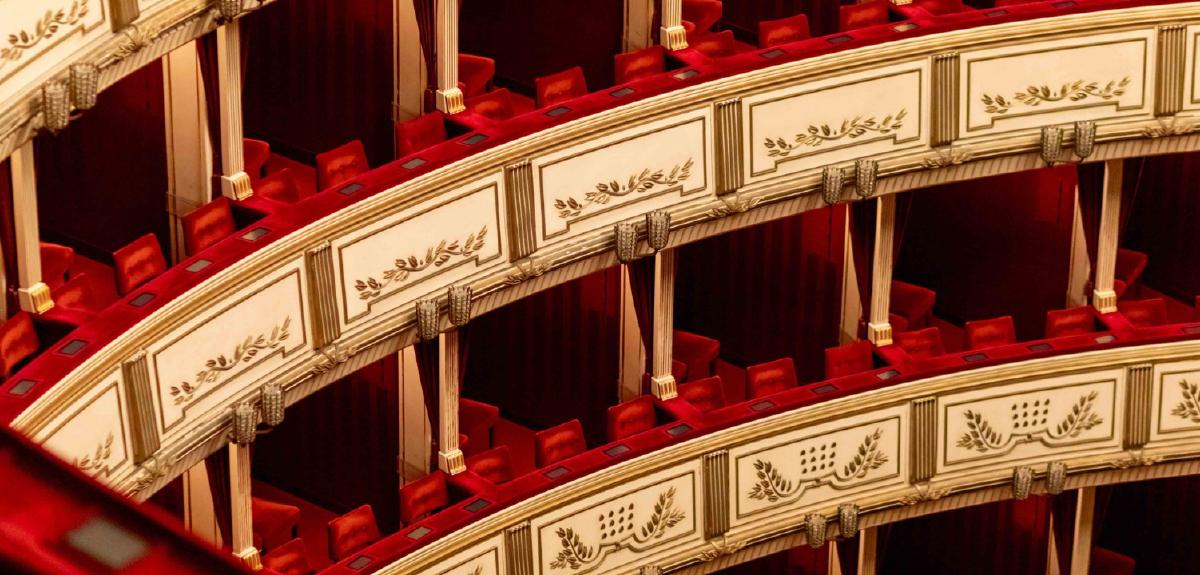
The opera has several categories of Logen (boxes), and they are a mixed bag. A front-row center box is a magical experience — private, elegant, with a small anteroom. But a side box in the back can mean watching the performance at an extreme angle.
If you want the box experience:
- Book a Mittelloge (center box) on the first or second tier
- Avoid any box described as “seitlich mit beschraenkter Sicht” (side with restricted view)
- Expect to pay EUR 180–300 per seat for a well-positioned box
- Boxes typically seat 4–6 people, and you can book individual seats within them
For most visitors, the Parkett or front Balkon offers a better experience for the same or less money.
Vienna State Opera Guided Tours#
You do not need a performance ticket to see inside the opera house. Guided tours run almost daily and are one of the best ways to appreciate the architecture.
Official Opera House Tours#
- Price: EUR 13 (adults), EUR 7 (children 6–14), free for children under 6
- Duration: Approximately 40 minutes
- Languages: German and English (other languages on select days)
- Schedule: Multiple times daily, typically at 13:00, 14:00, 15:00. Check the website for exact times as they vary by performance schedule.
- Book at: The opera house box office (same day) or online at wiener-staatsoper.at
The tour takes you through the grand staircase, the Tea Salon, the Marble Hall, the Schwind Foyer (with its famous paintings of opera scenes), and into the auditorium itself. On days without afternoon rehearsals, you get to see the stage from the stalls.
Guided Tours via Tour Operators#
If you prefer a broader Vienna music-themed experience, several operators combine the opera house with other musical landmarks:
Vienna Opera & Music Tours
Guided tours combining the Vienna State Opera house with other musical landmarks such as Mozart’s apartment and the Musikverein. Many include skip-the-line access to the opera building tour.
These typically cost EUR 25–50 and may include multiple stops (Mozart’s apartment, Musikverein, etc.), which can be a good deal if you are interested in Vienna’s broader musical history. Some include skip-the-line access to the opera house tour.
Dress Code: What to Actually Wear#
The dress code is one of the most asked-about topics, and the answer depends on where you are sitting.
Standing room: There is no enforced dress code. You will see everything from jeans to suits. Smart casual is the norm — clean trousers, a nice top or shirt. Sneakers are fine. Nobody will say anything.
Regular seats (Galerie, Balkon): Smart casual to business casual. Dark jeans are acceptable. You will not feel out of place in a button-down shirt and chinos or a simple dress.
Parkett and box seats: This is where things get more formal, especially on premiere nights and weekends. Men typically wear suits or at minimum a blazer with dress trousers. Women wear cocktail dresses or elegant separates. You will not be turned away in smart casual, but you will feel underdressed.
Premiere nights and the Opera Ball: Full formal. Tuxedos and evening gowns. The Opera Ball in February is strictly white tie.
Vienna State Opera vs. Volksoper: Which One?#
Vienna actually has two major opera houses, and most tourists only know about the Staatsoper. The Volksoper is the city’s second opera house, located in the 9th district, and it is worth knowing about.
| Vienna State Opera (Staatsoper) | Volksoper | |
|---|---|---|
| Focus | Grand opera, ballet | Operetta, musicals, lighter opera, ballet |
| Atmosphere | Formal, prestigious | Relaxed, approachable |
| Building | Iconic Ring location, ornate | Comfortable but less grand |
| Ticket prices | EUR 4–300+ | EUR 4–150 |
| Standing room | EUR 4 | EUR 4 |
| Best for | Classic opera experience, must-see building | Strauss operettas, family-friendly, first-timers nervous about opera |
| Getting there | U1/U2/U4 Karlsplatz | U6 Währinger Strasse |
If you love opera, do both. If you only have one night, the Staatsoper is the must-do for the building and the prestige. But if you find grand opera intimidating, the Volksoper is a friendlier introduction — their productions of Die Fledermaus and The Merry Widow are pure joy.
Both venues sell EUR 4 standing room tickets with the same system.
Best Seats for the Money#
After attending many performances across different sections, here is my honest ranking of value for money:
- Galerie front row center (EUR 40–60) — Full stage view, excellent acoustics, fraction of the Parkett price. My go-to recommendation for visitors.
- Parterre Stehplatz (EUR 4) — Best standing room because you are at stage level. Get in line early.
- Balkon front row (EUR 80–120) — Slightly better angle than Galerie, worth it if your budget allows.
- Parkett rows 5–12 center (EUR 180–250) — The premium experience. Treat-yourself territory.
- Balkon Stehplatz (EUR 4) — Easier to get than Parterre standing, still a great view.
Avoid: extreme side boxes, back rows of the Galerie (sound is fine but you are very far from the stage), and any seat marked “eingeschraenkte Sicht” (restricted view).
How Far in Advance to Book#
This depends entirely on what you want:
| What You Want | When to Book |
|---|---|
| Standing room | Day of (show up and queue) |
| Galerie seats for a regular performance | 2–4 weeks ahead |
| Good Parkett/Balkon seats | 6–8 weeks ahead |
| Premium seats for a popular production | 2–3 months ahead |
| Premiere night | As soon as tickets go on sale (they sell out within days) |
| New Year’s Eve / Opera Ball | Months in advance — these are special events with separate ticketing |
The opera publishes its full season schedule in spring for the following September–June season. If you know your travel dates, check the schedule early and book the productions that interest you.
Practical Tips for Your Visit#
Before the Performance#
- Arrive 30 minutes early if you have a seat. The building itself is worth exploring — the grand staircase, the foyers, the ceiling paintings.
- Check the runtime. Some operas run 4+ hours with intermissions. Wagner especially.
- Eat beforehand. The opera house bars serve drinks and small snacks, but real food options are limited and overpriced. Have dinner at one of the restaurants I recommend nearby.
During the Performance#
- Surtitles are displayed above the stage in German and English for most productions. Even if you do not speak Italian or German, you can follow along.
- No photos or recordings once the performance begins. You can photograph the interior before and during intermission.
- Intermissions usually last 20–30 minutes. Head to the bar for a glass of Austrian Sekt (sparkling wine) — it is part of the experience.
After the Performance#
- The area around the opera is lively after performances end (usually 22:00–22:30). The Albertina Passage club is directly underneath the opera, and there are bars and restaurants along Kärntner Strasse.
- Trams and the U-Bahn run until around midnight on weeknights and through the night on Friday and Saturday.
A Brief History of the Building#
The Vienna State Opera was the first major public building completed on the Ringstrasse, the grand boulevard that replaced the medieval city walls. Architects August Sicard von Sicardsburg and Eduard van der Null designed it in a Neo-Renaissance style. When it opened on May 25, 1869, with a performance of Mozart’s Don Giovanni, the public reaction was mixed — some critics called it a “sunken chest” because the surrounding Ringstrasse was built up higher than originally planned, making the building appear to sit in a depression.
The criticism devastated the architects. Van der Null died by suicide before the opening, and Sicardsburg died of a heart attack weeks later. Neither saw their masterpiece receive the acclaim it eventually earned. Emperor Franz Joseph, shaken by these events, reportedly never again expressed a strong opinion about public architecture, instead using the famous phrase “Es war sehr schoen, es hat mich sehr gefreut” (It was very nice, I enjoyed it very much) for everything.
The building suffered a direct bomb hit on March 12, 1945, which destroyed the auditorium and stage. The front facade, grand staircase, and Tea Salon survived. Reconstruction took a decade, and the opera reopened on November 5, 1955 — just months after Austria regained its sovereignty — with Beethoven’s Fidelio. The reopening was a massive symbolic moment for the country.
Frequently Asked Questions#
Can I buy Vienna State Opera standing room tickets online?#
No. Standing room tickets (Stehplatz) are sold only at the opera house box office, starting 80 minutes before each performance. This is intentional — it keeps them accessible and prevents resellers from buying them up. The price is always EUR 4.
What should I wear to the Vienna State Opera?#
For standing room and upper gallery seats, smart casual is fine — think clean trousers and a nice shirt or blouse. For Parkett and box seats, aim for business formal. Premiere nights and special events are more formal. There is no strict enforcement at the door, but you will feel more comfortable matching the tone of your section.
How long is a typical opera performance?#
Most operas run between 2.5 and 3.5 hours including one or two intermissions. Some Wagner operas can run over 4 hours. The exact runtime is listed on the opera’s website when you look at the performance schedule. Always check before booking, especially if you have standing room tickets.
Is the Vienna State Opera suitable for children?#
The opera offers specific family-friendly performances, particularly around the holidays. For regular evening performances, children under 6 are generally not admitted. Children 6 and older are welcome but keep in mind that most performances run late (ending around 22:00–22:30). The Volksoper tends to have more family-appropriate programming. The guided daytime tours are suitable for all ages.
Are there last-minute ticket deals?#
The opera does not do discounts in the traditional sense, but there are a few options. Standing room at EUR 4 is always available. Returned tickets appear on the website 2–3 days before the performance. Students under 27 can buy unsold tickets at heavily reduced prices (often EUR 10–20) starting 30 minutes before curtain with a valid student ID at the box office.
Is Vienna State Opera standing room worth it in 2026?#
Absolutely, and it is consistently rated one of the best cultural bargains anywhere in Europe. For EUR 4, you hear the same world-class performance as people who paid EUR 200 or more for a seat in the Parkett. The acoustics from the standing sections — particularly the Parterre Stehplatz at stage level and the Balkon Stehplatz — are excellent because the auditorium was designed for sound projection. Wear comfortable shoes, bring a scarf to tie to the railing and claim your spot, and arrive at least 60 to 90 minutes before doors open for popular productions like Carmen, La Traviata, or The Magic Flute.
How far in advance should I book Vienna opera tickets in 2026?#
For standing room, no advance booking is needed — queue at the box office 80 minutes before curtain. For Galerie seats at a regular weeknight repertoire performance, 2 to 4 weeks ahead is typically sufficient. Good Parkett or Balkon seats for popular productions need 6 to 8 weeks. Premium seats for headline productions — Carmen, La Traviata, Don Giovanni — should be booked 2 to 3 months ahead when they go on sale. Premiere nights sell out within days of the season announcement in spring. The full 2026/27 season schedule is published each spring at wiener-staatsoper.at.
What is the cheapest way to see opera in Vienna in 2026?#
The cheapest full opera experience is the EUR 4 standing room ticket at the Vienna State Opera, available at the box office 80 minutes before each performance. No online booking, no service fees. The Volksoper on Wahringer Strasse also offers EUR 4 standing room for operettas, musicals, and lighter operatic fare — and the queue there is usually shorter. Students under 27 with a valid ID can access unsold seated tickets for EUR 10 to 20, available at the Staatsoper box office 30 minutes before curtain. Even at EUR 4 standing room, the experience includes the same world-class cast, orchestra, and production as the most expensive tickets in the house.
Plan the Rest of Your Vienna Trip#
The opera is one highlight, but Vienna has enough to fill a week. Here are the guides that will help you plan around your performance night:
- 25 Best Things to Do in Vienna — the complete sightseeing guide
- 3 Days in Vienna: The Perfect Itinerary — day-by-day plan including an opera night
- Vienna on a Budget — how to do the city for under EUR 50/day (yes, including the opera)
- Best Tours in Vienna — the guided experiences actually worth booking
Vienna Opera Experiences on GetYourGuide
Browse guided opera house tours, classical music concert tickets, and Vienna music experiences. Includes options with skip-the-line access and multi-venue music tours.