Introduction#
I have lived in Vienna for over a decade, and I still find new reasons to love this city every month. If you are looking for things to do in Vienna, you are in for one of the best city trips in Europe — but most online guides recycle the same ten attractions and call it a day. This one does not.
Below are 25 things I actually recommend, organized so you can plan by interest. Some are famous landmarks; others are spots I take friends to when they visit. I have included real prices, directions, and the skip-the-line tickets that are genuinely worth the money (because standing in a 90-minute queue at Schonbrunn in July is not a vacation).
If you want a day-by-day plan, check my 3-day Vienna itinerary after reading this.
Historic Landmarks & Palaces#
1. Schonbrunn Palace#
The summer residence of the Habsburgs and Vienna’s most visited site. The Grand Tour (40 rooms) takes about an hour and is the version worth doing — the shorter Imperial Tour skips the best rooms. The gardens behind the palace are free and enormous; walk up to the Gloriette for a panoramic view of the city.
- Price: Grand Tour ticket EUR 24, Imperial Tour EUR 18. Garden entry free.
- Hours: 9:00–17:00 (until 18:30 in summer)
- Getting there: U4 to Schonbrunn, then a 5-minute walk.
Schoenbrunn Palace Skip-the-Line Tickets
Priority entry to Schoenbrunn’s Grand Tour (40 rooms) with a licensed English-speaking guide and a garden walk to the Neptune Fountain and Gloriette. Bypasses queues that can exceed 60 minutes in summer.
2. Hofburg Palace#
This was the Habsburgs’ winter palace, right in the center of the city. Today it holds the Imperial Apartments, the Sisi Museum, and the Imperial Silver Collection — all on one ticket. The Sisi Museum alone justifies the visit; it cuts through the romanticized myth and shows the real person.
- Price: EUR 17.50 (combo ticket for all three)
- Hours: 9:00–17:30 daily
- Location: Michaelerkuppel, 1010 Wien. Walk from Stephansplatz in 8 minutes.
3. St. Stephen’s Cathedral (Stephansdom)#
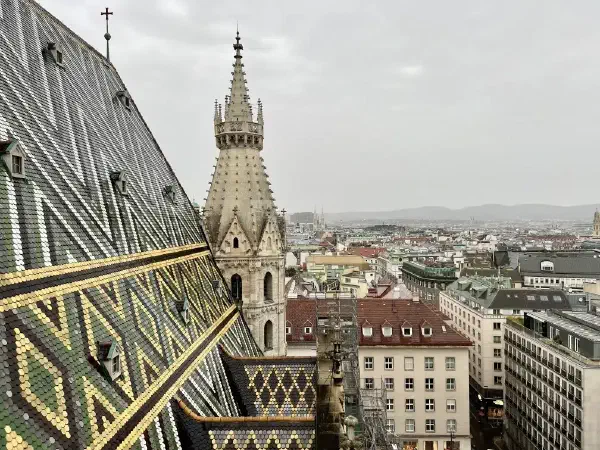
The cathedral is free to enter, and you should. The interior is genuinely impressive — not just another European church. Pay the EUR 6 to climb the South Tower (343 steps) for the best view of the old town rooftops. The elevator to the North Tower is easier but less rewarding.
- Price: Free entry. South Tower EUR 6, North Tower EUR 7, Catacombs tour EUR 6.50.
- Hours: Cathedral 6:00–22:00, towers vary by season.
- Location: Stephansplatz 3, 1010 Wien. Right at the U1/U3 Stephansplatz station.
4. Belvedere Palace#
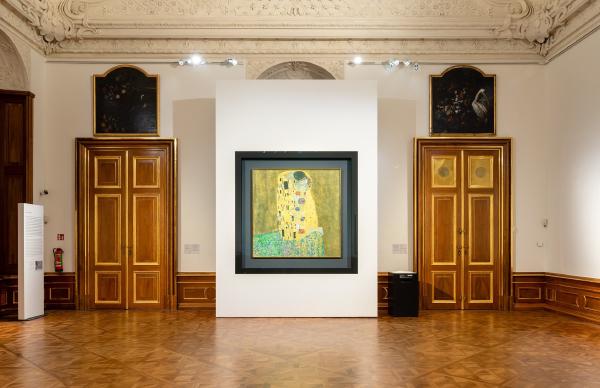
Two palaces (Upper and Lower) separated by one of the most beautiful baroque gardens in Europe. The Upper Belvedere holds Klimt’s The Kiss — if you see one painting in Vienna, this is it. The Lower Belvedere is less crowded and has excellent rotating exhibitions.
- Price: Upper Belvedere EUR 16.70, combo ticket EUR 27.
- Hours: 10:00–18:00 daily (Fridays until 21:00)
- Getting there: Tram D to Schloss Belvedere or a 15-minute walk from Karlsplatz.
Belvedere Palace Skip-the-Line Tickets
Priority entry to the Upper Belvedere, home to Klimt’s The Kiss and one of the finest baroque garden settings in Europe. Combo tickets include the Lower Belvedere with its rotating exhibitions.
5. Spanish Riding School#
Watching the Lipizzaner stallions perform classical dressage in a baroque hall from 1735 is unlike anything else. Full performances sell out weeks in advance. The morning exercise sessions are cheaper, easier to book, and frankly just as interesting — you hear the trainers giving instructions and see the real work.
- Price: Morning exercises from EUR 18, full performances from EUR 30–200.
- Hours: Schedule varies; check srs.at for dates.
- Location: Inside the Hofburg, Michaelerplatz 1, 1010 Wien.
Spanish Riding School Tickets
Tickets for morning exercises or full performances of classical dressage by Lipizzaner stallions in the historic baroque hall inside the Hofburg. Morning exercises are cheaper and show the real training process.
Museums & Art#
6. Kunsthistorisches Museum (Art History Museum)#
My single favorite museum in Vienna. The building itself — with a Klimt-decorated staircase and a cafe under the dome — competes with the collection. Bruegel, Vermeer, Raphael, Caravaggio, Velazquez. The Egyptian and Roman collections downstairs are world-class and usually empty.
- Price: EUR 21
- Hours: 10:00–18:00, Thursdays until 21:00. Closed Mondays.
- Location: Maria-Theresien-Platz, 1010 Wien.
Kunsthistorisches Museum Tickets
Entry to Vienna’s Art History Museum — home to Bruegel, Vermeer, Raphael, Caravaggio, and Velázquez, plus a Klimt-decorated staircase and a café under the dome. Thursdays open until 21:00.
7. Albertina#
Two locations now: the original Albertina on the Staatsoper side of the Hofburg and the Albertina Modern at Karlsplatz. The original holds one of the world’s greatest graphics collections (Durer, Monet, Picasso) plus the Habsburg State Rooms. The Modern focuses on contemporary art from 1945 onward.
- Price: EUR 18.90 each, or EUR 24.90 combo.
- Hours: 10:00–18:00, Wednesdays and Fridays until 21:00.
- Location: Albertinaplatz 1, 1010 Wien.
8. Leopold Museum (MuseumsQuartier)#
The largest Egon Schiele collection in the world, plus major works by Klimt and Kokoschka. The MuseumsQuartier courtyard is worth visiting even if you skip the museums — it is one of the best places in the city to sit outside with a drink.
- Price: EUR 15
- Hours: 10:00–18:00, Thursdays until 21:00. Closed Tuesdays.
- Location: Museumsplatz 1, 1070 Wien.
9. Haus der Musik#
An interactive sound museum that works for adults and kids alike. You can conduct the Vienna Philharmonic (virtually), walk through rooms that visualize sound, and learn about the major composers who lived in Vienna. It takes about 90 minutes and is genuinely fun, not dry.
- Price: EUR 16
- Hours: 10:00–22:00 daily
- Location: Seilerstatte 30, 1010 Wien.
10. Mumok (Museum of Modern Art)#
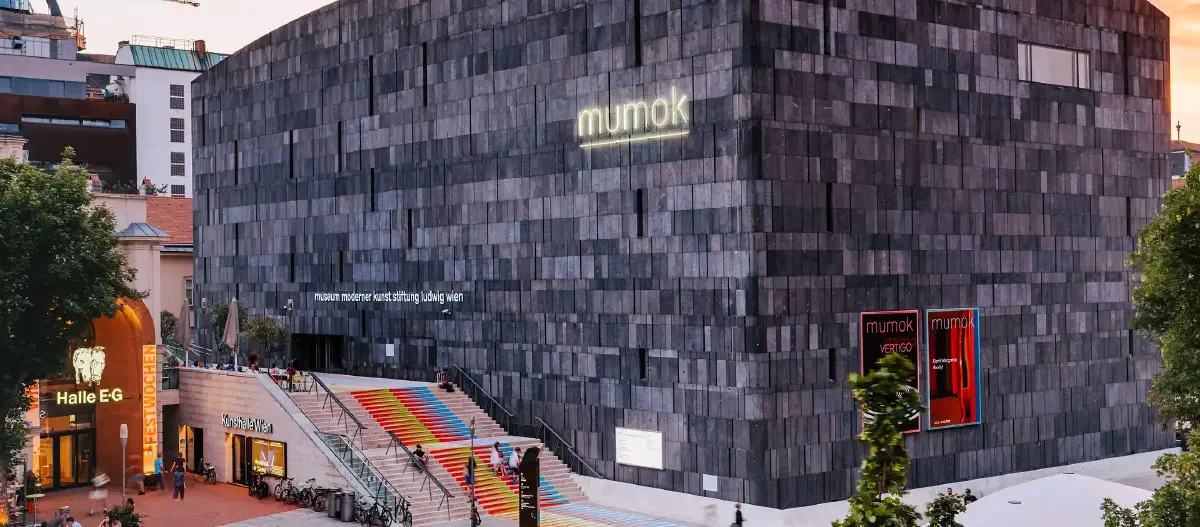
Also in the MuseumsQuartier. If you prefer contemporary art over classical, this is your museum. The permanent collection spans Pop Art, Fluxus, Nouveau Realisme, and Vienna Actionism. Rotating exhibitions are consistently strong.
- Price: EUR 15
- Hours: 10:00–18:00, Thursdays until 21:00. Closed Mondays.
Museum Pass Comparison#
| Pass | Price | Includes | Best for |
|---|---|---|---|
| Vienna City Card | EUR 17–29 (24h–72h) | Public transport + discounts at 200+ attractions | Short visits, moderate sightseeing |
| Vienna Pass | EUR 87–147 (1–6 days) | Free entry to 70+ attractions + hop-on bus | Heavy sightseeing, 3+ museums/day |
| MuseumsQuartier Combo | EUR 34 | Leopold + Mumok + Kunsthalle | Art-focused visitors |
The Vienna Pass pays for itself only if you visit three or more paid attractions per day. For most visitors, buying individual tickets and using the Vienna City Card for transport discounts is the smarter move.
Food & Drink Experiences#
11. Naschmarkt#
Vienna’s largest and oldest open-air market. Over 100 stalls selling everything from fresh produce to Middle Eastern spices to oysters with wine at 11:00 on a Saturday. Walk the full length (it stretches along the Wienzeile) and eat as you go.
- Location: Between Karlsplatz and Kettenbruckengasse, 1060 Wien. U4 Kettenbruckengasse.
- Hours: Mon–Fri 6:00–19:30, Sat 6:00–18:00. Closed Sundays.
12. Wiener Schnitzel at Figlmuller#
Figlmuller has been serving Schnitzel since 1905. The portions are enormous (hanging off the plate) and the quality is consistent. Yes, it is touristy. It is also genuinely good. There are two locations steps apart — the Wollzeile original and the Backerstrasse extension.
- Price: Schnitzel around EUR 17–19.
- Location: Wollzeile 5, 1010 Wien.
13. Traditional Viennese Coffeehouse#
Do not go to Starbucks. Sit in a proper Kaffeehaus, order a Melange (Vienna’s cappuccino) and a slice of Apfelstrudel, and read a newspaper on a wooden stick. Cafe Central is the famous one (expect a queue). My picks for the real experience without the wait: Cafe Sperl (Gumpendorfer Strasse 11) or Cafe Hawelka (Dorotheergasse 6).
- Price: Coffee and cake EUR 8–14.
14. Heuriger Wine Tavern in Grinzing#
A Heuriger is a tavern where winemakers serve their own wine — it is a Viennese tradition with no real equivalent elsewhere. Grinzing (19th district) has the highest concentration. Order a Viertel (quarter liter) of Gruner Veltliner, grab a plate of cold cuts from the buffet, and sit in the garden.
- Getting there: Tram 38 to Grinzing, then walk uphill.
- Price: Wine from EUR 4/glass, buffet plates EUR 8–15.
Vienna Wine Tasting Tour
Guided wine tasting experience visiting traditional Heuriger wine taverns in Vienna’s wine-growing districts, with Grüner Veltliner and Wiener Gemischter Satz poured by local winemakers.
15. Sachertorte at Hotel Sacher vs. Demel#
The eternal debate. Hotel Sacher (Philharmoniker Strasse 4) makes the original — dense, dark chocolate, apricot jam layer. Demel (Kohlmarkt 14) makes a rival version. My honest take: Sacher’s is slightly richer, but Demel’s cafe is more beautiful and the queue is shorter. Try both if you can.
- Price: EUR 9–10 per slice at either.
Parks & Outdoors#
16. Prater & the Giant Ferris Wheel (Riesenrad)#
The Riesenrad is the 1897 ferris wheel you have seen in every Vienna photo. The ride takes about 15 minutes, and the view at the top gives you a nice overview of the city. Beyond the wheel, the Prater park is massive — rent a bike and ride through the Hauptallee, a 4.4 km straight avenue lined with chestnut trees.
- Price: Riesenrad EUR 14.50. Park entry free.
- Hours: Riesenrad 10:00–21:45 (seasonal variations).
- Getting there: U1 or U2 to Praterstern.
Riesenrad Giant Ferris Wheel Tickets
Tickets for Vienna’s iconic 1897 Ferris wheel in the Prater — a 15-minute ride with panoramic views over the city. One of Vienna’s most recognisable landmarks.
17. Danube Island (Donauinsel)#
A 21 km long artificial island in the Danube. Locals swim, barbecue, jog, and cycle here all summer. Free entry, no tourists, real Viennese life. The Copa Cagrana area on the north end has bars and restaurants right on the water.
- Getting there: U1 to Donauinsel. You step off the metro directly onto the island.
- Price: Free.
18. Stadtpark & the Johann Strauss Monument#
The most photographed monument in Vienna is the golden Johann Strauss statue here. The park itself is lovely for a morning walk along the Wien River. Combine it with a visit to the Kursalon (the concert hall in the park) if you want a classic Strauss and Mozart evening concert.
- Location: Parkring 1, 1010 Wien. U4 Stadtpark.
19. Kahlenberg Viewpoint#
The best panoramic view of Vienna, full stop. On a clear day you can see all the way to the Carpathians in Slovakia. Take bus 38A from Heiligenstadt (end of U4) to the top. Combine it with a walk down through the vineyards to Nussdorf or Grinzing for a Heuriger visit (#14).
- Getting there: U4 to Heiligenstadt, then bus 38A (roughly 25 minutes).
- Price: Free (covered by public transport ticket).
20. Schonbrunn Zoo (Tiergarten)#
The oldest zoo in the world (founded 1752) and consistently ranked among the best in Europe. The panda house, the rainforest house, and the polar bear enclosure are standouts. Budget 3–4 hours if you are going with kids.
- Price: EUR 26 adults, EUR 15 children (6–18).
- Hours: 9:00–17:00 (until 18:30 in summer).
- Location: Inside the Schonbrunn Palace grounds. Combine with #1.
Music, Culture & Local Experiences#
21. Vienna State Opera (Wiener Staatsoper)#
You do not need to be an opera fan. Seeing a performance inside this building is an experience in itself. Standing tickets (Stehplatz) cost EUR 15 and go on sale 80 minutes before each performance — the queue forms about two hours before. Alternatively, book a guided tour of the building during the day for EUR 13.
- Location: Opernring 2, 1010 Wien.
- Performance season: September–June.
Vienna State Opera Guided Tour
Daytime guided tour inside the Wiener Staatsoper — one of the world’s great opera houses — taking you through the main hall, stage, and imperial foyer. A great option if you cannot attend a performance.
22. Classical Concert at Musikverein#
Home of the Vienna Philharmonic and the famous New Year’s Concert. The Golden Hall has the best acoustics in the world (this is not opinion — it is measurably true). Even if the Philharmonic is not playing, other ensembles perform here regularly. Tickets range from EUR 40 to over EUR 200.
- Location: Musikvereinsplatz 1, 1010 Wien.
23. Walk the Ringstrasse#
The Ring is the grand boulevard that replaced Vienna’s old city walls in the 1860s. Walking the full loop (roughly 5.3 km) takes you past the Opera, Parliament, Rathaus, Burgtheater, University, Votivkirche, and back. Do it on foot or hop on Tram 1 or 2 which circles the Ring.
- Price: Free on foot. Single tram ticket EUR 2.40.
24. Street Art at the Danube Canal#
The stretch of the Danube Canal between Schwedenplatz and Friedensbrucke is Vienna’s open-air street art gallery. The murals change regularly, and on warm evenings the bars along the canal (Strandbar Herrmann, Adria Wien, Tel Aviv Beach) are where locals hang out.
- Getting there: U1/U4 Schwedenplatz, then walk along the canal.
- Price: Free.
Day Trips & Excursions#
25. Wachau Valley Wine Region#
A UNESCO-listed river valley 80 km west of Vienna. Take the train to Krems (1 hour from Wien Franz-Josefs-Bahnhof), then cruise or cycle between medieval villages, apricot orchards, and terraced vineyards. Durnstein — where Richard the Lionheart was imprisoned — is the highlight stop.
- Getting there: REX train to Krems (EUR 18 return). Bike rental available in Krems from around EUR 20/day.
- Duration: Full day trip.
Wachau Valley Day Trip from Vienna
Full-day guided excursion to the UNESCO-listed Wachau Valley, 80 km west of Vienna — covering medieval villages, terraced vineyards, apricot orchards, and the historic castle at Dürnstein. Hotel pickup included.
How to Plan Your Days#
Vienna is a walkable city, and most of the attractions above cluster in a few areas. Here is how I would group them:
Innere Stadt (1st district): Stephansdom (#3), Hofburg (#2), Spanish Riding School (#5), Albertina (#7), State Opera (#21), Cafe Hawelka (#13), Ringstrasse walk (#23). You can cover all of this on foot in a single day.
Museum district: Kunsthistorisches Museum (#6), MuseumsQuartier — Leopold Museum (#8) and Mumok (#10). These are across the street from each other. Combine with Naschmarkt (#11), which is a 10-minute walk south.
Schonbrunn area: Schonbrunn Palace (#1) and Schonbrunn Zoo (#20). Give this half a day or more with kids.
Belvedere & Stadtpark: Belvedere Palace (#4), Stadtpark (#18), Haus der Musik (#9). All connected by a short tram ride or 20-minute walk.
North/Danube area: Prater (#16), Danube Island (#17), Danube Canal street art (#24).
Grinzing & hills: Kahlenberg (#19) and Heuriger (#14). Best as an afternoon-into-evening trip.
For a complete day-by-day breakdown, see my 3-day Vienna itinerary.
Frequently Asked Questions#
How many days do you need in Vienna?#
Three full days is the sweet spot. You can see the major landmarks, visit two or three museums, eat well, and still have time for a coffeehouse afternoon or a Heuriger evening. If you add a day trip to the Wachau Valley, plan four days.
Is Vienna expensive to visit?#
Moderate by Western European standards — cheaper than Paris or Zurich, more expensive than Prague or Budapest. Expect EUR 15–25 per museum, EUR 12–20 for a sit-down lunch, and EUR 2.40 for a single public transport ticket. A 72-hour transport pass costs EUR 17.10, which is excellent value.
What should I not miss in Vienna?#
If you only have one day: Schonbrunn Palace in the morning, the Innere Stadt (Stephansdom, Hofburg, Graben) in the afternoon, and a Schnitzel dinner at Figlmuller. Add the Kunsthistorisches Museum or Belvedere if you have a second day.
Is Vienna walkable?#
Very. The entire 1st district (Innere Stadt) is compact and mostly pedestrian. You can walk from the Opera to Stephansdom in 10 minutes. For longer distances, the U-Bahn (metro) is clean, fast, and runs every 3–5 minutes during the day. Buy the 72-hour pass and forget about taxis.
What is the best time to visit Vienna?#
April through June and September through October. Summers (July–August) are hot (regularly above 35C now) and the major palaces are packed. December is magical if you enjoy Christmas markets, but dress warmly — it gets properly cold.
Is Vienna worth visiting for families in 2026?#
Yes. Vienna has excellent family attractions including Schönbrunn Zoo (the world’s oldest, founded 1752, entry EUR 26 adults / EUR 15 children), the interactive Haus der Musik (EUR 16), the vast Prater park with the 1897 Giant Ferris Wheel (EUR 14.50), and the Natural History Museum. The city is flat, clean, and easy to navigate with children. The U-Bahn is stroller-friendly and most major museums offer free or heavily discounted entry for children under 10.
What is the best free thing to do in Vienna in 2026?#
Walking the Ringstrasse is the best free experience in Vienna — a 5.3 km boulevard past the Opera, Parliament, Burgtheater, and Rathaus that costs nothing. The Prater park, Stadtpark, Naschmarkt (browsing only), and most church interiors including St. Stephen’s Cathedral are also free. Take Tram 1 or 2 around the full Ring for EUR 2.40 if walking the whole loop feels like too much.
How far in advance should I book Schonbrunn Palace tickets in 2026?#
Book at least 48–72 hours ahead in summer (July–August) to guarantee entry and avoid queues that can exceed 60 minutes. In shoulder season (April–June, September–October) you can usually book the day before. A skip-the-line Grand Tour ticket costs EUR 35–50 and saves significant waiting time on busy days.
Final Thoughts#
Vienna rewards people who go beyond the obvious. Yes, see Schonbrunn and the Stephansdom — but also sit in a coffeehouse for two hours doing nothing, drink wine in a garden in Grinzing, and walk the Danube Canal at sunset. That is when the city really shows itself.
For more detailed planning, check out my 3-day Vienna itinerary, my guide to where to eat in Vienna, and my neighborhood breakdown of where to stay in Vienna.
Have questions about planning your trip? Drop them in the comments below.