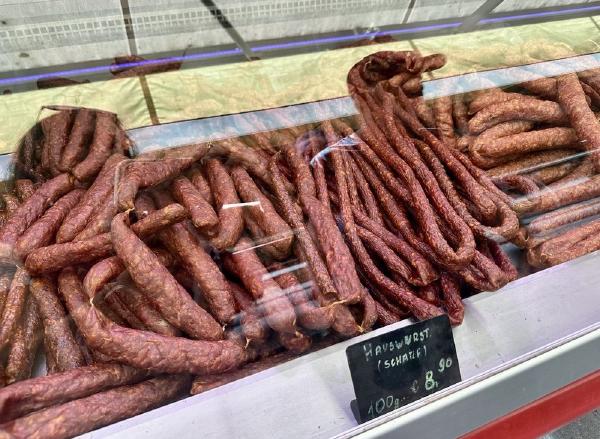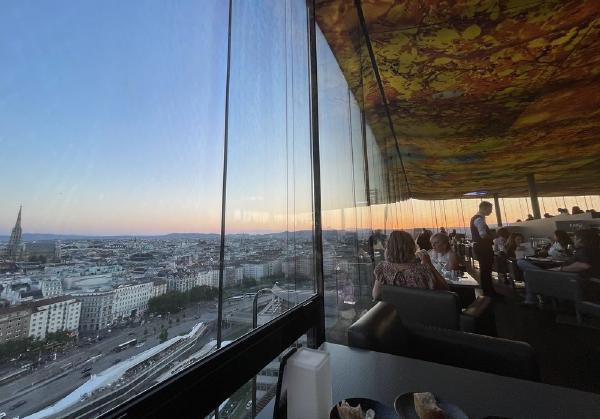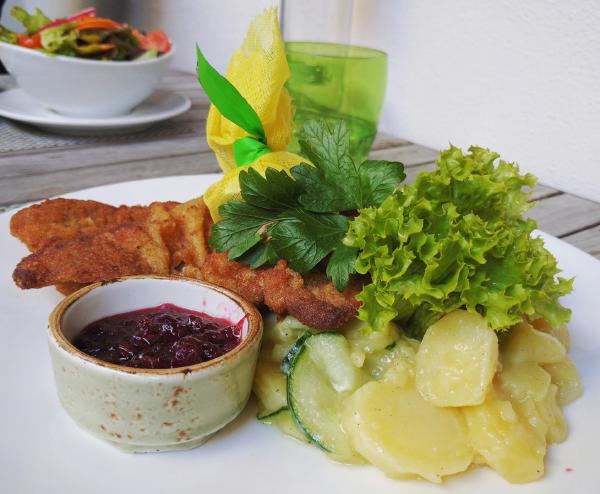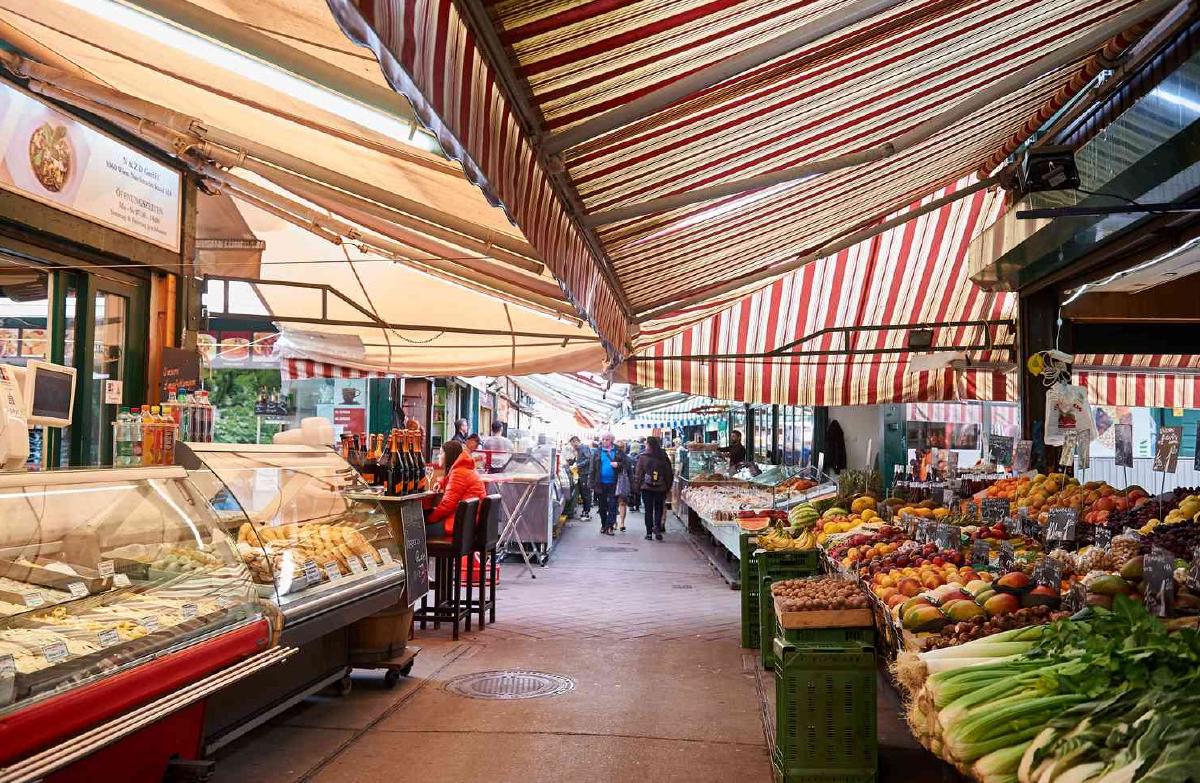
I’ve lived in Vienna for over a decade and I still go to the Naschmarkt most Saturday mornings. Not always to buy anything specific — sometimes just to walk, drink a coffee, eat a pickled olive with my fingers, and feel like the city is alive around me. There’s something about an open-air market that no supermarket can replicate. The noise, the smells, the vendors calling out in four different languages, the smell of fresh bread mixing with fish and roasting spices.
But the Naschmarkt has a split personality, and if you don’t know what you’re walking into, you can spend an hour being aggressively upsold, pay EUR 22 for a tourist-trap goulash, and leave wondering what all the fuss was about. This guide will help you avoid all of that.
What Is the Naschmarkt?#
The Naschmarkt is Vienna’s biggest and oldest open-air market. It runs roughly 1.5 kilometres along the Wienzeile between the 4th and 6th districts, from Karlsplatz in the east to Kettenbrückengasse in the west. Somewhere between 100 and 120 stalls operate here on any given day, selling everything from fresh produce and cheese to Turkish spices, Middle Eastern mezze, fresh fish, hot food, and cheap beer.
The market’s origins go back to the 16th century, when dairy farmers used a stretch of the Wien River as a selling point. After the river was vaulted over in the 1890s — creating the Wienzeile — the space above became what we know today. The architecture along the market is stunning: Otto Wagner designed the ornate Majolika Haus and Medallion House on the north side, and the golden detailing is visible above the stall rooftops if you look up.
Today the Naschmarkt is listed as a protected cultural heritage site by the City of Vienna, which means the vendors must maintain a certain mix of fresh produce, specialty foods, and restaurants. In practice, this still allows for considerable variance in quality — which is why knowing which stalls to go to matters.
Layout: How the Market Is Organized#
The market divides roughly into three zones:
- Western end (Kettenbrückengasse side): Mostly local regular shoppers, better produce prices, more authentic atmosphere. The Saturday flea market extends from here.
- Central section: The heart of the market — cheese stalls, olive stalls, spice vendors, fish counters, Turkish and Asian food sections. This is where you’ll spend most of your time.
- Eastern end (Karlsplatz side): More tourist-oriented. This is where the sit-down restaurants cluster and where prices for everything trend noticeably higher.
My advice: enter from Kettenbrückengasse, walk east, and stop whenever something looks good. Don’t just drift in from Karlsplatz and eat at whatever restaurant catches you first.
Best Food Stalls at the Naschmarkt#
This is the section that actually matters. Skip the sit-down places along the main avenue — I’ll get to those later. Here are the stalls and small eateries that are genuinely worth your time.
Umar Fisch (Stall 76–79)#
Umar Fisch is probably the most famous vendor at the Naschmarkt, and the reputation is earned. They sell some of the finest fresh and smoked fish in Vienna, with a standing counter where you can eat on the spot. The smoked salmon is exceptional, the gravlax is buttery and well-seasoned, and the prawn cocktail is old-fashioned in the best possible way.
What to order: A plate of smoked salmon with bread and horseradish cream (around EUR 12–14), or the mixed seafood platter if you’re hungry. They also do excellent boiled shrimp by the 100g.
Neni am Naschmarkt (Stall 510)#
Neni is a proper restaurant, but it earns its place on this list because the quality is genuinely high and the concept is interesting. It was founded by an Israeli-Viennese family and serves Middle Eastern-influenced dishes — hummus, shakshuka, mezze plates, and lamb dishes — in a setting that’s casual but feels properly cooked. The shakshuka is arguably the best in Vienna.
Address: Naschmarkt 510, 1060 Wien Hours: Mon–Sat 8:00–22:00 Website: neni.at
What to order: The shakshuka for breakfast (EUR 14), the hummus plate with warm flatbread (EUR 11), or the mezze sharing board for two (EUR 28).
Tewa (Stall 76)#
Tewa is a small Turkish-run deli and hot food counter that most visitors walk past entirely. That’s a mistake. They do one of the best falafel wraps in the market — proper falafel, still warm, stuffed into flatbread with tahini, roasted peppers, and pickled vegetables. It costs around EUR 6–7 and takes about three minutes to eat standing at the counter.
They also sell an excellent range of ready-made salads and mezze by weight — tabbouleh, baba ghanoush, roasted aubergine — which are useful if you’re putting together a picnic-style meal.
The Olive and Cheese Stalls (Stalls 30–60)#
The central section of the Naschmarkt has a dense cluster of olive and cheese vendors that all look similar from a distance but vary considerably in quality. The stalls to head for are in the stall 30–60 range on the south side of the market.
Look for vendors with large open barrels of olives rather than pre-packaged goods — they’re almost always better. Ask for a taste before buying. The classic Kalamata olives marinated with garlic and herbs are the reliable choice, but many stalls also carry interesting regional varieties from Greece and Turkey.
For cheese, look for vendors selling proper Balkan white cheeses — Serbian kajmak, Bulgarian sirene, Turkish beyaz peynir. These are vastly better value and more interesting than supermarket cheese, and a small block for EUR 4–5 makes an excellent snack with some market bread.
The Asian and International Section#
Towards the western end of the market, the stalls become noticeably more international. There’s a section with Japanese, Chinese, Thai, and Korean-influenced food counters — some are genuinely very good, some are mediocre. I’d steer you toward the Korean stall run by a family who also sells kimchi and fermented vegetables by the jar. The bibimbap bowl (around EUR 9) is filling, properly seasoned, and exactly what you want after an hour of walking around.
The Persian and Afghan stalls in this section also sell excellent rice dishes and slow-cooked meat plates. Ask what’s fresh that day and point at whatever looks good.
Tourist Traps to Avoid#
I’ll be direct about this because it’ll save you money and disappointment.
The sit-down restaurants that line the main avenue of the Naschmarkt — particularly between Karlsplatz and roughly stall 40 — are almost entirely designed for tourists. They have aggressive touts outside, laminated menus with photographs, and prices that are 30–50% higher than equivalent food elsewhere in Vienna. The goulash is frequently from a bag, the Wiener Schnitzel is often frozen, and the service can be dismissive.
The dead giveaway is the menu board facing outward with English translations, a prix-fixe tourist lunch that seems like a deal but isn’t, and a waiter who flags you down before you’ve even looked at the restaurant. In Vienna, a good restaurant never needs to flag you down.
The market’s eastern entrance at Karlsplatz is particularly bad for this. If you walk in from Karlsplatz and immediately sit at the first place that has an inviting terrace, there’s a good chance you’ll pay EUR 20 for something unremarkable.
For genuinely good sit-down meals near the Naschmarkt, I’d point you toward the side streets off the Wienzeile — Schleifmühlgasse and Margaretenstrasse in particular have some excellent neighbourhood restaurants.
The Saturday Flea Market#
Every Saturday, the Naschmarkt extends significantly westward with a flea market that runs from roughly Kettenbrückengasse to beyond the regular market boundary. It starts at 6:00 and winds down around 15:00–16:00, though the best stuff is gone by 10:00.
The flea market is genuinely excellent. It’s not the curated, expensive kind where everything has been pre-priced for dealers. It’s a chaotic, sprawling, slightly overwhelming mix of:
- Antique furniture, mirrors, and picture frames
- Vintage clothing, handbags, and leather goods
- Books in German, English, and various other languages
- Old porcelain, glassware, and kitchenware
- Soviet-era memorabilia and Eastern European antiques
- Vinyl records in crates that take patience to go through
- Jewellery, watches, and coins (quality varies enormously)
- Junk (genuinely, just junk — there’s always some junk)
The key skill is getting there early and knowing what you’re looking at. Dealers arrive at opening time to pick through the best pieces. If you’re there by 7:00, you’ll see things that will be gone by 9:00.
Bring cash. Almost no vendors at the flea market take cards.
What to Buy: Naschmarkt Souvenirs#
If you’re looking for something to bring home that’s actually from Vienna and not mass-produced in a gift shop, the Naschmarkt is a good place to shop. Here are the things worth buying:
Spices and dried herbs: The spice stalls in the central section sell high-quality za’atar, sumac, dried rose petals, and blended spice mixes that you won’t find in supermarkets at home. Prices are reasonable — EUR 3–6 for a bag that will last months.
Infused olive oils: Several stalls sell their own-label infused oils — chilli, rosemary, truffle. The quality is genuinely high, and a 250ml bottle for EUR 8–10 makes a good gift.
Turkish delight and baklava: The Turkish and Middle Eastern stalls sell proper baklava made in-house, not the pre-packaged supermarket variety. A small box (EUR 8–12) is a far better souvenir than anything in the airport.
Pickled vegetables: Austrian Letscho (pepper and tomato relish) and various pickled cucumbers and peppers in jars are sold at multiple stalls. These are genuinely eaten by Viennese people and make an unusual gift.
Dried mushrooms: Several stalls sell excellent Steinpilze (porcini) and Pfifferlinge (chanterelles) in dried form. These are expensive but high quality and intensely flavoured.
For more ideas on what to eat and where to find it in Vienna, check out my full Vienna food guide.
Best Times to Visit#
Timing your visit to the Naschmarkt correctly makes a significant difference in your experience.
Weekday Mornings (My Recommendation)#
Tuesday, Wednesday, or Thursday mornings between 8:00 and 11:00 are the best times to visit the Naschmarkt if your goal is actually experiencing the market rather than navigating crowds. The stalls are fully stocked, the vendors are unhurried, and you’ll share the space mostly with local shoppers doing their weekly grocery run.
This is when the market feels like it actually belongs to Vienna. You’ll see elderly Viennese women with wheeled shopping carts comparing cheeses, restaurant buyers examining fish counters, and neighbourhood regulars being greeted by name.
Saturday: The Full Experience#
Saturday at the Naschmarkt is the full, chaotic, sensory-overload experience. By 10:00, the market is packed. By noon, it’s genuinely difficult to walk through the central section quickly. Add the flea market and you’ve got several hours of content.
Saturday is worth doing for the atmosphere alone, but go early — by 8:00 if possible. The flea market is at its best in the first two hours, and you’ll want to eat before the food stalls get queues.
Avoid: Sunday and Late Afternoon#
The Naschmarkt is closed on Sundays. This catches more tourists than it should — if your Vienna trip only includes a Sunday, you’ll find locked stalls and perhaps a few stragglers. Plan accordingly.
Late afternoons on any day are also less rewarding. Some stalls close early, the produce that hasn’t sold gets marked down (which can be an opportunity if you’re cooking) but selection is thin, and the energy drops considerably.
Practical Information#
Address: Naschmarkt, Wienzeile, 1040/1060 Wien
Opening Hours:
- Monday to Friday: 6:00 – 19:30
- Saturday: 6:00 – 18:00
- Sunday: Closed
- Saturday Flea Market: 6:00 – ~16:00
Nearest U-Bahn:
- U4 Kettenbrückengasse — best stop for the western (local) end and flea market
- U1/U2/U4 Karlsplatz — best stop for the eastern end (tourist section)
For the best experience, take U4 to Kettenbrückengasse and walk eastward through the market.
Payment: The regular Naschmarkt stalls are a mix of cash and card, but cash is safer. The flea market is almost entirely cash-only. Bring EUR 50–100 in small notes if you’re planning to shop seriously.
Toilets: There are paid public toilets at both ends of the market (EUR 0.50). The ones at the Kettenbrückengasse end are better maintained.
Nearby Attractions#
The Naschmarkt sits in a culturally rich part of Vienna. After you’re done at the market, these are within comfortable walking distance:
The Secession Building (5-minute walk): The golden “cabbage dome” at Friedrichstrasse 12 is one of Vienna’s most distinctive Art Nouveau buildings, built in 1897 for the Vienna Secession movement. The basement contains Klimt’s Beethoven Frieze — 34 metres of gilded, painted wall that is one of the most extraordinary things in the city. Entry is EUR 10, and it’s worth every cent. Check the Secession website for current exhibitions.
Theater an der Wien (3-minute walk): One of Vienna’s oldest theatres, where Mozart’s The Magic Flute premiered in 1791. Now an opera and musical theatre venue. Worth checking the programme if you’re interested in a night out. The building itself is beautiful.
Mariahilfer Strasse (10-minute walk): Vienna’s main shopping street. If you need to restock on anything practical or want a different kind of retail experience after the market, it’s a short walk north.
Freihausviertel: The quiet neighbourhood just south of the market between Schleifmühlgasse and Margaretenstrasse is one of my favourite parts of Vienna — independent bookshops, good coffee, low-key bars, and neighbourhood restaurants that have nothing to do with tourism.
If you’re building a full day around this area, I’d suggest combining the Naschmarkt with the Secession Building and then lunch in the Freihausviertel. That’s a genuinely excellent Vienna morning.
Food Tours at the Naschmarkt#
If you’d rather have someone guide you through the stalls and help you navigate what’s worth trying, a food tour is a reasonable way to do it. The best ones visit 6–8 stalls, include tastings at each, and cover enough history and context that you leave actually understanding the market.
I’d recommend booking through GetYourGuide for a curated Naschmarkt food tour — the guided options let you filter by group size, language, and format, and the quality is generally consistent. A food tour also makes it much harder to accidentally spend EUR 22 on a tourist-trap goulash.
Naschmarkt Food Tour Vienna
Guided food tours of Vienna’s Naschmarkt visit 6–8 stalls with tastings at each, covering the market’s best vendors and enough history to make sense of what you’re eating. Free cancellation available on most options.
For more context on Vienna’s broader food scene and which food tours are worth booking, see my guide to the best Vienna food tours.
Fitting the Naschmarkt into Your Vienna Trip#
The Naschmarkt works best as a morning activity followed by lunch. Plan for 2–3 hours if you’re just browsing, 3–4 hours if you’re doing the Saturday flea market as well.
If you’re on a tight budget, the Naschmarkt is an excellent place to eat well for very little money — a meal of falafel wrap, olives, some cheese, and a piece of baklava can cost under EUR 15. For more ideas on eating cheaply without sacrificing quality, see my Vienna on a budget guide.
And if you’re trying to build a full itinerary around the market, it fits naturally into the 4th/5th/6th district cluster — see my broader things to do in Vienna guide for how to structure a day in this part of the city.
The Naschmarkt is loud, chaotic, and occasionally overwhelming, but it’s also one of the few places in Vienna where you can eat your way through the world while standing between two Otto Wagner buildings. That’s not nothing. Go hungry.
Frequently Asked Questions#
What is the best time to visit the Naschmarkt in Vienna?#
Weekday mornings between Tuesday and Thursday, from 8:00 to 11:00, are the best time to visit. The stalls are fully stocked, vendors are unhurried, and the market feels genuinely local. Saturday is lively but crowded — go before 8:00 if you want the flea market at its best.
Is the Naschmarkt open on Sundays?#
No. The Naschmarkt is closed on Sundays. Regular market hours are Monday to Friday 6:00–19:30 and Saturday 6:00–18:00, with the Saturday flea market running from 6:00 until approximately 16:00.
What should I eat at the Naschmarkt?#
The standout options are smoked salmon at Umar Fisch (around EUR 12–14), shakshuka at Neni am Naschmarkt (EUR 14), and a falafel wrap from Tewa (EUR 6–7). Olives, Balkan cheeses, fresh baklava, and Korean bibimbap bowls are also excellent value.
Is the Naschmarkt worth visiting in 2026?#
Yes, the Naschmarkt remains one of Vienna’s best free experiences in 2026. You can eat a full, excellent meal at the stalls for under EUR 15. The Saturday flea market is one of the best in Central Europe. Avoid the sit-down restaurants at the Karlsplatz end and focus on the stalls deeper in.
What is the cheapest way to eat well at the Naschmarkt in 2026?#
Skip the sit-down restaurants entirely and eat at the stalls. A falafel wrap from Tewa costs EUR 6–7, a mezze plate from a Turkish deli is under EUR 10, and fresh baklava runs EUR 1–2 per piece. A full meal of stall food — wrap, olives, cheese, and something sweet — costs under EUR 15 per person.
How early should I arrive at the Naschmarkt Saturday flea market?#
Arrive by 7:00 at the latest if you want the best picks. Antique dealers and experienced shoppers are there from 6:00 when the market opens, and the most interesting items are gone by 9:00. Bargaining is expected — a polite request will usually get you 10–20% off the asking price.
Your Next Step#
Pick your day and go. Weekday morning if you want calm and the full local experience, Saturday if you want the flea market and don’t mind the crowds. Take U4 to Kettenbrückengasse, not Karlsplatz. Walk east, not west. Eat at the stalls, not the restaurants. And bring cash.
If you want company and context for your first visit, a Naschmarkt food tour is the easiest way to cover the best stalls without second-guessing yourself the entire time.
Naschmarkt Food Tour Vienna
Guided tours of the Naschmarkt include tastings at the market’s best stalls — fish, cheese, olives, and pastries — with a local guide who knows which vendors to trust and which to skip.