Introduction#
I have lived in Vienna for over a decade and I still find new reasons to walk into the Kunsthistorisches Museum. That is the thing about this city — it is not just that there are a lot of museums (there are over 100 of them), it is that the collections here are genuinely among the finest in the world. Vienna was an imperial capital for six centuries. The Habsburgs were obsessive collectors. The result is that art and artifacts that would be the centrepiece of any other city’s museum are here stacked floor to ceiling, almost matter-of-factly.
But that abundance creates its own problem. You cannot do all of it in a week, let alone a few days. I have watched friends arrive with ambitious museum plans and leave exhausted and vaguely disappointed because they tried to see too much. The goal of this guide is to help you choose well — to spend your time (and your money) on the institutions that will actually move you, and to skip the ones that will just drain your afternoon.
I have also included honest opinions about which museums are overrated, which ones the tourist map tries to push on you, and exactly how to save on entry fees if you are watching your budget.
For context on how museums fit into a broader Vienna trip, see my things to do in Vienna guide and my 3-day Vienna itinerary.
Quick Comparison: Vienna’s Top Museums at a Glance#
| Museum | Focus | Entry (2026) | Time Needed | Best For |
|---|---|---|---|---|
| Kunsthistorisches Museum | Old Masters, ancient art | €21 | 3–4 hours | Everyone |
| Upper Belvedere | Klimt, Austrian art | €18 | 2–3 hours | Art lovers |
| Albertina | Graphic arts, Impressionism | €19.90 | 2 hours | Art lovers |
| Natural History Museum | Nature, prehistory | €15 | 2–3 hours | Families |
| Leopold Museum | Schiele, Expressionism | €16 | 2 hours | Art lovers |
| mumok | Contemporary/modern art | €15 | 1–2 hours | Modern art fans |
| Haus der Musik | Interactive music | €16 | 1.5–2 hours | Families, music fans |
| Wien Museum | Viennese city history | €17 | 1.5–2 hours | History buffs |
| Technical Museum | Science and technology | €17 | 2–3 hours | Families, kids |
| Sigmund Freud Museum | Psychoanalysis history | €14 | 1 hour | History/psychology |
The 10 Best Museums in Vienna#
1. Kunsthistorisches Museum (KHM)#
Address: Maria-Theresien-Platz, 1010 Vienna Hours: Tuesday–Sunday 10:00–18:00, Thursday until 21:00 Entry: Adults €21, under 19 free Website: khm.at
If Vienna had only one museum, this would be it. The Kunsthistorisches Museum — the Art History Museum — is not just a great museum by Austrian standards. It is one of the great museums of the world, in the same conversation as the Louvre or the Prado. The building itself, a palatial neo-Renaissance palace completed in 1891, is part of the experience before you have even looked at a single painting.
The collection covers ancient Egypt and the Near East, Greek and Roman antiquities, a coin cabinet, and — the real reason people queue outside — the Picture Gallery. The Picture Gallery holds one of the densest concentrations of Old Master paintings anywhere on earth. Vermeer’s Art of Painting is here. So is the largest collection of Bruegel paintings in the world. Caravaggio, Rubens, Raphael, Titian, Velázquez — all represented by major works, not the minor pieces that other museums settle for.
I always head straight to Room X for the Brueghels and spend at least an hour there. Then I work backwards through the Flemish and Dutch masters. On a weekday, especially a winter morning, you can stand in front of paintings that would draw enormous crowds in any other capital and have them almost to yourself.
The KHM also offers a combined ticket with the Schatzkammer (Imperial Treasury) and the Weltmuseum, which brings down the per-museum cost significantly. If you are visiting multiple Habsburg collections, look into the Vienna City Card or KHM membership options.
2. Upper Belvedere#
Address: Prinz-Eugen-Straße 27, 1030 Vienna Hours: Daily 10:00–18:00, Wednesday until 21:00 Entry: Adults €18 (Upper Belvedere only), combined Upper + Lower €28 Website: belvedere.at
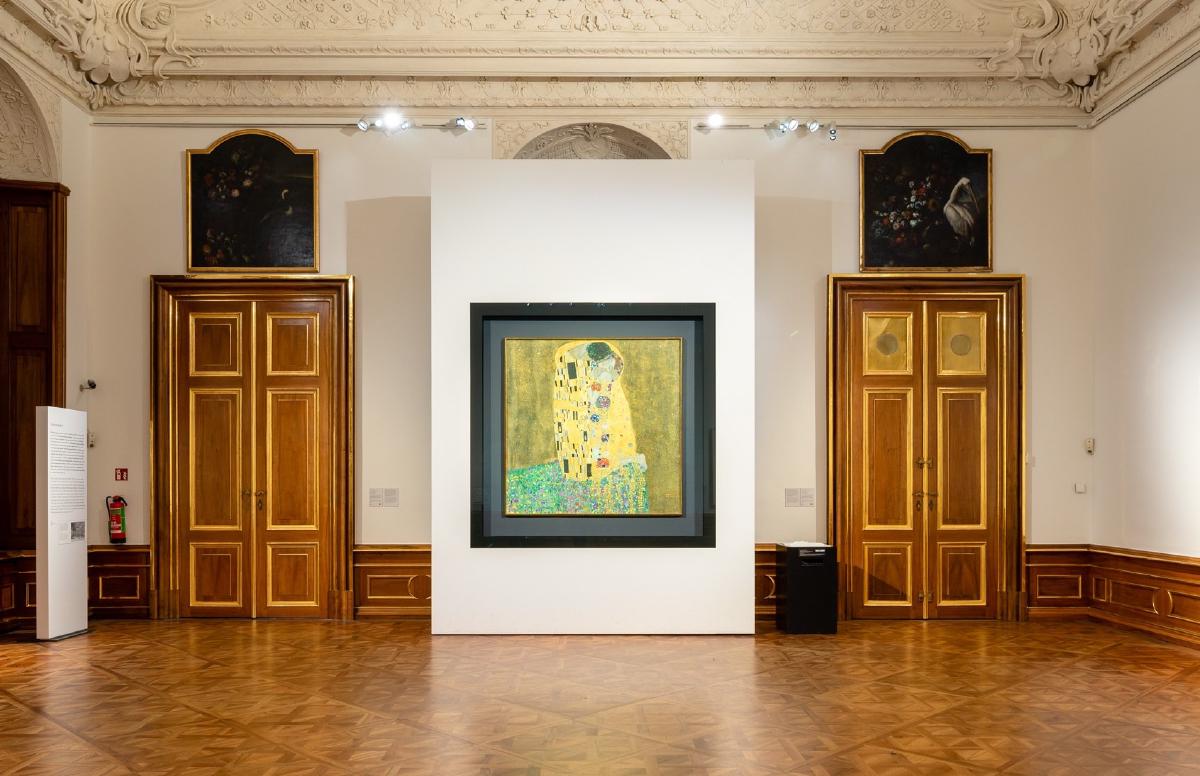
The Belvedere complex — consisting of the Upper and Lower Belvedere palaces and their gardens — is one of the most beautiful palace complexes in Europe. The Upper Belvedere is where you want to spend most of your time, because it houses the permanent collection including the works most visitors come specifically to see: Gustav Klimt’s The Kiss.
I will be straightforward about The Kiss. It is smaller than you expect, the room it hangs in can get crowded, and the painting itself — all gold leaf and symbolism — rewards slow looking. Give it five minutes in the crowd, then step back and look again from a distance. The room also contains Klimt’s Judith and several other major works, which are worth equal attention and rarely get it because everyone is focused on The Kiss.
Beyond Klimt, the Upper Belvedere has outstanding work by Egon Schiele, Oskar Kokoschka, and other Austrian Expressionists, as well as earlier Austrian Baroque painting and sculpture. The Biedermeier collection is particularly strong and underappreciated.
The gardens between the two palaces are laid out in formal French style and are lovely in spring and summer. The Lower Belvedere (sold separately or as a combined ticket) houses changing exhibitions and the Baroque Museum — worth seeing if you have the time, but not essential if you are making choices.
3. Albertina#
Address: Albertinaplatz 1, 1010 Vienna Hours: Daily 10:00–18:00, Wednesday and Friday until 21:00 Entry: Adults €19.90 Website: albertina.at
The Albertina sits in the heart of the first district, adjacent to the State Opera, and holds one of the world’s great collections of graphic art — over a million drawings, watercolours, and prints. The permanent collection spans Dürer to Picasso, but it is the rotating exhibitions that often make the Albertina essential viewing. The museum has a knack for pulling together major retrospectives that would not look out of place in Paris or New York.
The permanent Batliner Collection, installed on the second floor, covers Impressionism through the early 20th century and includes genuinely important works by Monet, Cézanne, Picasso, and Chagall. It often gets overlooked in favour of whatever the major temporary show is — which would be a mistake.
The Albertina Modern, a second outpost in Karlsplatz, opened in 2020 and focuses on post-war and contemporary art. It is free on the first Sunday of the month and worth checking if you are in Vienna on that day.
4. Natural History Museum (NHM)#
Address: Maria-Theresien-Platz, 1010 Vienna Hours: Wednesday–Monday 09:00–18:30, Wednesday until 21:00 Entry: Adults €15, under 19 free Website: nhm-wien.ac.at
The Natural History Museum sits directly across from the Kunsthistorisches Museum on Maria-Theresien-Platz — they are mirror-image buildings, which is intentional and enjoyable — and it is significantly underrated by people who come to Vienna primarily for art.
The NHM’s highlight is the Venus of Willendorf, a 29,500-year-old Venus figurine that is one of the oldest and most important prehistoric art objects in the world. It is tiny, it is in a small case, and every time I bring someone to see it there is a moment of real awe. The dinosaur halls are well done, the meteorite collection is genuinely impressive, and the gem and mineral rooms have a hypnotic quality.
This is also one of the best museums in Vienna for families with children. The displays are engaging, there is plenty of space, and children’s programming is strong.
5. Leopold Museum#
Address: Museumsplatz 1, 1070 Vienna Hours: Wednesday–Monday 10:00–18:00, Thursday until 21:00 Entry: Adults €16 Website: leopoldmuseum.org
The Leopold Museum is located in the MuseumsQuartier complex in the seventh district and holds the world’s largest collection of works by Egon Schiele. If you know Schiele’s work — the raw, angular, intensely personal paintings and drawings — seeing this collection is an overwhelming experience. If you are not familiar with him, the Leopold is a superb introduction.
Rudolf Leopold, a Viennese ophthalmologist, spent decades building the collection that now bears his name. His obsessive focus on Austrian Expressionism means that the Leopold punches well above its institutional weight. Beyond Schiele, the collection includes major Klimt works (including the Death and Life painting), Oskar Kokoschka, and a strong representation of the Wiener Werkstätte decorative arts movement.
The building itself — a white cube in the MuseumsQuartier courtyard — is deliberately understated, which makes the richness of the collection feel all the more unexpected.
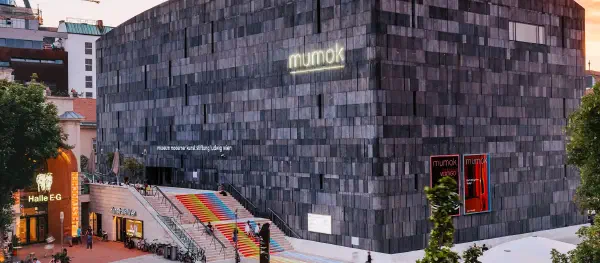
6. mumok (Museum of Modern Art Ludwig Foundation Vienna)#
Address: Museumsplatz 1, 1070 Vienna Hours: Tuesday–Sunday 10:00–19:00, Thursday until 21:00 Entry: Adults €15 Website: mumok.at
Also in the MuseumsQuartier, mumok covers 20th and 21st century art from the Ludwig collection. The permanent collection is strong in Pop Art — the Ludwig family were major collectors — with significant works by Warhol, Lichtenstein, and Jasper Johns. Viennese Actionism, a controversial avant-garde movement from the 1960s, is well represented and not easily seen in depth elsewhere.
I want to be honest: mumok is not for everyone. If you prefer Old Masters, Impressionism, or figurative art, your time is better spent at the KHM, Belvedere, or Albertina. But if you are drawn to contemporary and conceptual art, mumok offers a serious collection and strong programming.
The temporary exhibitions at mumok are consistently ambitious and sometimes brilliant. I have seen career-defining shows here that I would have had to travel to London or Berlin to see otherwise.
7. Haus der Musik#
Address: Seilerstätte 30, 1010 Vienna Hours: Daily 10:00–22:00 Entry: Adults €16 Website: hdm.at
The Haus der Musik is the museum I recommend to people who say they are not particularly interested in museums. It is interactive, playful, and genuinely fun — but it is built around a serious subject: Vienna’s musical heritage and the physics and experience of sound itself.
The museum occupies the former residence of Otto Nicolai, founder of the Vienna Philharmonic, and its floors cover the Vienna Philharmonic’s history, the great Viennese composers (Mozart, Beethoven, Schubert, Brahms, Mahler), and — the section everyone loves — an interactive floor where you can conduct the Vienna Philharmonic virtually, compose music, and explore how sound works.
The conducting simulation, where you stand before a screen and the orchestra responds to your baton movements, produces immediate joy in approximately every visitor I have ever brought here. It is worth the entry fee on its own.
The museum stays open until 22:00, which makes it a good option for an evening when most other attractions have closed.
8. Wien Museum#
Address: Karlsplatz 8, 1040 Vienna Hours: Tuesday–Sunday 10:00–18:00 Entry: Adults €17, free on first Sunday of the month Website: wienmuseum.at
The Wien Museum reopened in late 2023 after an extensive renovation and expansion, and the result is genuinely impressive. The permanent collection tells the story of Vienna from its earliest settlements through to the present day, and the renovated building makes the experience of moving through that history feel spatial and intuitive.
This is not the most famous museum in the city, and international visitors often overlook it entirely. That is their loss. If you want to understand why Vienna is the way it is — the coffee house culture, the Ring Road, the social housing movement, the end of empire, the city’s relationship with memory and forgetting — the Wien Museum puts it together better than anywhere else.
The building sits on Karlsplatz, adjacent to the spectacular Karlskirche, and the museum’s rooftop terrace offers a fine view of the church’s dome.
9. Technical Museum Vienna (Technisches Museum Wien)#
Address: Mariahilfer Straße 212, 1140 Vienna Hours: Monday–Friday 09:00–17:30, weekends 10:00–18:00 Entry: Adults €17, family tickets available Website: technischesmuseum.at
The Technical Museum is located slightly outside the city centre, near Schönbrunn, and it is worth the tram ride if you are travelling with children or have a genuine interest in science, technology, and industrial history. The museum covers energy, mobility, production, and communication through a mix of historic artefacts and interactive displays.
Highlights include a working mine shaft you can descend into, an impressive collection of historical aircraft and vehicles, and interactive zones that work well for children of almost any age. The museum is large — budget at least two hours, three if you are thorough — and it does not feel rushed or superficial.
For families visiting Vienna, I often recommend the Technical Museum over some of the more art-focused institutions, not because those are less worthwhile but because children engage with it differently and the experience tends to be more uniformly enjoyable.
10. Sigmund Freud Museum#
Address: Berggasse 19, 1090 Vienna Hours: Daily 10:00–18:00 Entry: Adults €14 Website: freud-museum.at
The Sigmund Freud Museum occupies the apartment where Freud lived and worked from 1891 until 1938, when he fled Vienna after the Nazi annexation. It is a genuinely moving place — partly because the rooms themselves are atmospheric and largely intact, partly because the story of Freud’s final year in Vienna, his reluctant exile, and his death in London in 1939 is so poignant.
The famous couch is not here — Freud took it with him to London, where it remains in the Freud Museum there. What is here is his original waiting room, his study, his library, and a substantial collection of personal photographs, documents, and artefacts. The antiquities collection, Freud was an obsessive collector of ancient figurines, is displayed throughout the apartment.
I include this museum in the top ten not because it is spectacular — it is not — but because it rewards serious visitors. If you are interested in intellectual history, psychology, fin-de-siècle Vienna, or the Jewish experience in Austria, the Freud Museum adds a layer to your understanding of the city that the larger institutions cannot replicate.
The museum is compact. Plan an hour, maybe 90 minutes if you read the labels carefully.
Which Museums to Skip#
Vienna’s tourist economy generates a lot of low-quality attractions marketed aggressively to visitors. Here is an honest assessment of the ones I would avoid.
Madame Tussauds Vienna#
Entry costs around €27 and the collection of wax figures is mediocre compared to the London original. Vienna’s Tussauds leans heavily on local celebrities that international visitors will not recognise, and even the international figures are hit or miss. Considering what €27 buys you elsewhere in this city — nearly a full day at the Belvedere, for instance — the opportunity cost is painful.
Time Travel Vienna#
A walk-through multimedia experience near the Stephansdom that attempts to tell Viennese history through special effects. It is expensive (around €22) and shallow. If you want to understand Viennese history, the Wien Museum does it better for less money and without the theme-park presentation.
The Globe Museum#
This is actually a legitimate institution — part of the Austrian National Library — but it is niche enough that most visitors will find it more curious than genuinely engaging. Worth mentioning because it appears on some “best of” lists. If antique globes are your passion, go; otherwise, skip.
Ripley’s Believe It or Not#
It is here. It is €20. It is Ripley’s. You know what it is.
The pattern with all of these is the same: they are positioned near major tourist thoroughfares, they charge premium prices, and they offer a generic “attraction” experience rather than the specific depth that makes Vienna’s great museums worthwhile.
How to Save Money on Vienna Museums#
Vienna’s museums are not cheap, but there are legitimate ways to reduce costs significantly.
First Sundays of the Month#
Several major museums offer free or reduced entry on the first Sunday of each month. In 2026 this includes:
- Kunsthistorisches Museum — free entry
- Natural History Museum — free entry
- Wien Museum — free entry
- Albertina Modern — free entry
If you can plan a Vienna trip to include a first Sunday, you can save €50–€60 per person on admission alone.
Under-19 Free Entry#
Nearly every major state-owned museum in Vienna — including the KHM and NHM — is free for visitors under 19. This is not well publicised in English but it applies to international visitors as well as Austrians. If you are travelling with children or teenagers, this is a significant saving.
The Vienna City Card#
The Vienna City Card includes unlimited public transport and discounts at many museums. It does not cover full free entry to most major institutions, but the discounts stack up. Whether it is worth it depends on how many museums you plan to visit and over how many days. I have a full breakdown in my dedicated guide.
The Vienna Pass#
The Vienna Pass (separate from the City Card) offers free entry to over 60 attractions including the Kunsthistorisches Museum, Belvedere, Albertina, and many others. For museum-heavy itineraries over two or three days, it typically pays for itself. Check the current pricing on the official Vienna Pass website before you decide.
Booking GetYourGuide Tours#
Guided museum tours through GetYourGuide often include skip-the-line access and cost a similar amount to standard entry — sometimes less, with the added value of an expert guide. For the Belvedere and KHM especially, a guided tour can be worth it during peak season when queues are long.
Vienna Museum Tours with Skip-the-Line Access
Guided tours of the Kunsthistorisches Museum and Upper Belvedere include expert commentary and skip-the-line entry — particularly useful in summer when walk-up queues can run 30–45 minutes.
Museum-Specific Combination Tickets#
Several museums sell combined tickets that reduce the per-museum cost:
- KHM + Schatzkammer + Weltmuseum combined ticket
- Upper + Lower Belvedere combined ticket
- MuseumsQuartier pass covering Leopold and mumok
These are not widely promoted but are available at the ticket desks and worth asking about.
How to Plan Your Museum Days#
If You Have Two Days for Museums#
Day 1: Start at the Kunsthistorisches Museum in the morning (arrive at opening). After lunch, cross Maria-Theresien-Platz to the Natural History Museum for the Venus of Willendorf and the gem collections. Evening: Haus der Musik (open until 22:00).
Day 2: Belvedere in the morning — Upper Belvedere first, then the gardens, then the Lower if you want more. Afternoon: Albertina for the permanent collection and whatever temporary show is running.
If You Have One Day for Museums#
Go to the Kunsthistorisches Museum. Spend four hours there. This is the non-negotiable answer. If you have energy left, the Albertina is a 10-minute walk.
For Art-Focused Visitors#
KHM + Belvedere Upper + Albertina + Leopold Museum. This covers the sweep of Western art from antiquity to the early 20th century and gives you the best of both the imperial collection and the specifically Viennese Expressionist tradition.
For Families with Children#
Natural History Museum + Haus der Musik + Technical Museum. These three engage children at every age and do not require patience for static display cases. For Vienna with kids, I have more detailed suggestions.
For Budget Visitors#
Target a first Sunday of the month for free entry to the KHM and NHM. Add the Wien Museum (also free that day). This is an exceptional day of culture at zero cost. For more ideas on stretching your budget, see my Vienna on a budget guide.
Practical Tips for Visiting Vienna Museums#
Book online in advance. For the Belvedere and Albertina especially, online booking prevents queue frustration at peak times. Most museums allow booking on their own websites with no added fees.
Go on weekday mornings. Vienna’s major museums are substantially quieter on Tuesday through Thursday mornings compared to weekends. If your schedule allows, this is when to go.
Audio guides are worth it at the KHM. The KHM’s audio guide (around €5 extra) is genuinely well produced and adds context that the labels alone do not provide. At other museums, I generally skip the audio guide — the ones at the Belvedere, for instance, are mediocre.
The museum cafés vary enormously. The KHM café is genuinely good. The Albertina’s café is overpriced. The NHM café is canteen-style but fine. Plan accordingly.
Coat check is usually free. Vienna museums typically provide free coat and bag storage. Use it — wandering through galleries with a heavy backpack is unpleasant and some museums require it for large bags anyway.
Photography is generally permitted in the permanent collections of major Vienna museums, without flash. Temporary exhibitions sometimes restrict photography — check the signage.
For your first visit to the city, my 3-day Vienna itinerary integrates museum visits with the other major sights so you are not spending every day inside.
Frequently Asked Questions#
What is the best museum in Vienna?#
The Kunsthistorisches Museum is the single best museum in Vienna — one of the great art museums in the world, with the largest Bruegel collection anywhere, plus major Vermeers, Caravaggios, Rubens, and Velázquez. Budget 3-4 hours and visit on a Thursday evening (open until 21:00) when tourist crowds thin significantly after 17:00.
How much does it cost to visit Vienna museums?#
Entry ranges from EUR 14 at the Sigmund Freud Museum to EUR 21 at the Kunsthistorisches Museum. Several major state-owned museums — including the KHM and Natural History Museum — are free on the first Sunday of each month. Under-19s enter almost every major state museum for free, regardless of nationality.
Which Vienna museums are free?#
The Kunsthistorisches Museum, Natural History Museum, Wien Museum, and Albertina Modern are all free on the first Sunday of each month. If your Vienna dates overlap with a first Sunday, you can see four world-class institutions at zero entry cost — a saving of EUR 50-60 per adult.
Is the Belvedere worth visiting in Vienna?#
Yes. The Upper Belvedere houses Klimt’s The Kiss, major works by Schiele and Kokoschka, and strong Biedermeier collections — all inside a stunning baroque palace with formal French gardens. Book tickets online in advance (no extra cost) since summer walk-up queues reach 45 minutes. The combined Upper and Lower Belvedere ticket (EUR 28) is good value if you have a full half-day.
What is the best museum in Vienna for families?#
The Natural History Museum (free for under-19s) and the Haus der Musik are the top picks for families. The Haus der Musik features a virtual conducting simulation with the Vienna Philharmonic and stays open until 22:00 — ideal for an evening visit. The Technical Museum near Schönbrunn is the best option for older children, with a working mine shaft, historical aircraft, and interactive science zones.
Is the Vienna Pass worth it for museums in 2026?#
The Vienna Pass is worth it if you plan to visit 4 or more major museums in 2-3 days. It covers free entry to the Kunsthistorisches Museum (EUR 21), Upper Belvedere (EUR 18), Albertina (EUR 19.90), and 60+ other attractions. Check the current pricing at viennapass.com and compare it against the individual entry costs for the specific museums on your list before buying.
What is the best time to visit the Kunsthistorisches Museum in 2026?#
Thursday evenings are the best time — the KHM stays open until 21:00, and crowds thin significantly after 17:00. Weekday mornings from Tuesday to Thursday (arriving at opening at 10:00) are also far quieter than weekends. In peak summer (July-August), even weekday mornings can be busy by 11:00, so arriving right at opening is always the smartest move.
Is Klimt’s The Kiss worth seeing in person in Vienna in 2026?#
Yes. The Kiss hangs in the Upper Belvedere (EUR 18 entry) and repays slow, attentive looking — the gold leaf and intricate patterning reveal far more in person than in reproductions. The room also contains Klimt’s Judith and several major Schiele works, which deserve equal attention. Visit on a Wednesday evening (open until 21:00) for a quieter experience and more space to stand in front of the painting.
Final Thoughts#
Vienna’s museum scene is not just good for a European capital — it is extraordinary by any standard. The depth of the collections at the KHM and Belvedere, the specificity of the Leopold Museum, the interactivity of the Haus der Musik, the newly renovated Wien Museum: these are institutions that reward real time and attention.
My advice is always the same: do fewer museums and do them properly. Four hours at the KHM beats an hour each at four places. A slow morning with the Klimts at the Belvedere, ending with a coffee in the garden, beats rushing through six institutions in a day.
Choose well, go slowly, and leave time for a Schnitzel and a glass of Grüner Veltliner at the end of it. This city rewards that approach.
Ready to plan your Vienna museum days? Browse guided museum tours on GetYourGuide to see which ones include skip-the-line access and expert commentary — particularly useful for the KHM and Belvedere during peak season.
Guided Vienna Museum Tours
Choose from guided tours of the Kunsthistorisches Museum, Upper Belvedere, and Albertina — many include skip-the-line access and an expert guide who can cover the highlights in two to three hours.
For everything else you need to plan your trip, start with my complete guide to things to do in Vienna.