Introduction#
I have been living in Vienna for over a decade, and one of the things I tell every visitor is this: some of the best day trips from Vienna are better than most people’s entire European itineraries. Within a two-to-three-hour train radius you get Alpine lakes, Roman ruins, a UNESCO railway, two foreign capitals, and some of the finest wine country on the continent. You do not need a car for any of it.
This guide covers the 10 day trips I actually recommend. I have done every one of them multiple times. I will tell you which are genuinely worth the effort, which are overrated, and exactly how to get there without overpaying. Prices and train times are current as of early 2026.
Comparison Table#
| Destination | Distance | Travel Time | Best By | Cost (round trip) | Highlight |
|---|---|---|---|---|---|
| Wachau Valley | 80 km | 1 hr to Melk | Train + boat | EUR 25–55 | Wine tasting, Danube cruise, Melk Abbey |
| Salzburg | 300 km | 2.5 hrs | Train (ÖBB) | EUR 30–58 | Mozart, fortress, Old Town |
| Bratislava | 65 km | 1 hr | Train (ÖBB/RegioJet) | EUR 10–22 | Cheap eats, castle, quirky Old Town |
| Hallstatt | 290 km | 3.5–4 hrs | Train + ferry | EUR 40–70 | Lakeside views, salt mine |
| Baden bei Wien | 26 km | 30 min | Train/Badner Bahn | EUR 6–10 | Thermal spas, Beethoven, wine |
| Semmering | 100 km | 1.5 hrs | Train (ÖBB) | EUR 18–28 | UNESCO railway, mountain hikes |
| Krems an der Donau | 75 km | 1 hr | Train (ÖBB) | EUR 18–26 | Art Mile, wine taverns, Wachau gateway |
| Eisenstadt | 60 km | 1 hr | Train/bus | EUR 12–20 | Esterhazy Palace, Burgenland wine |
| Carnuntum | 40 km | 45 min | Train + bus | EUR 8–14 | Roman archaeological park |
| Graz | 200 km | 2.5 hrs | Train (ÖBB) | EUR 26–50 | Culinary capital, Kunsthaus, Schlossberg |
1. Wachau Valley#
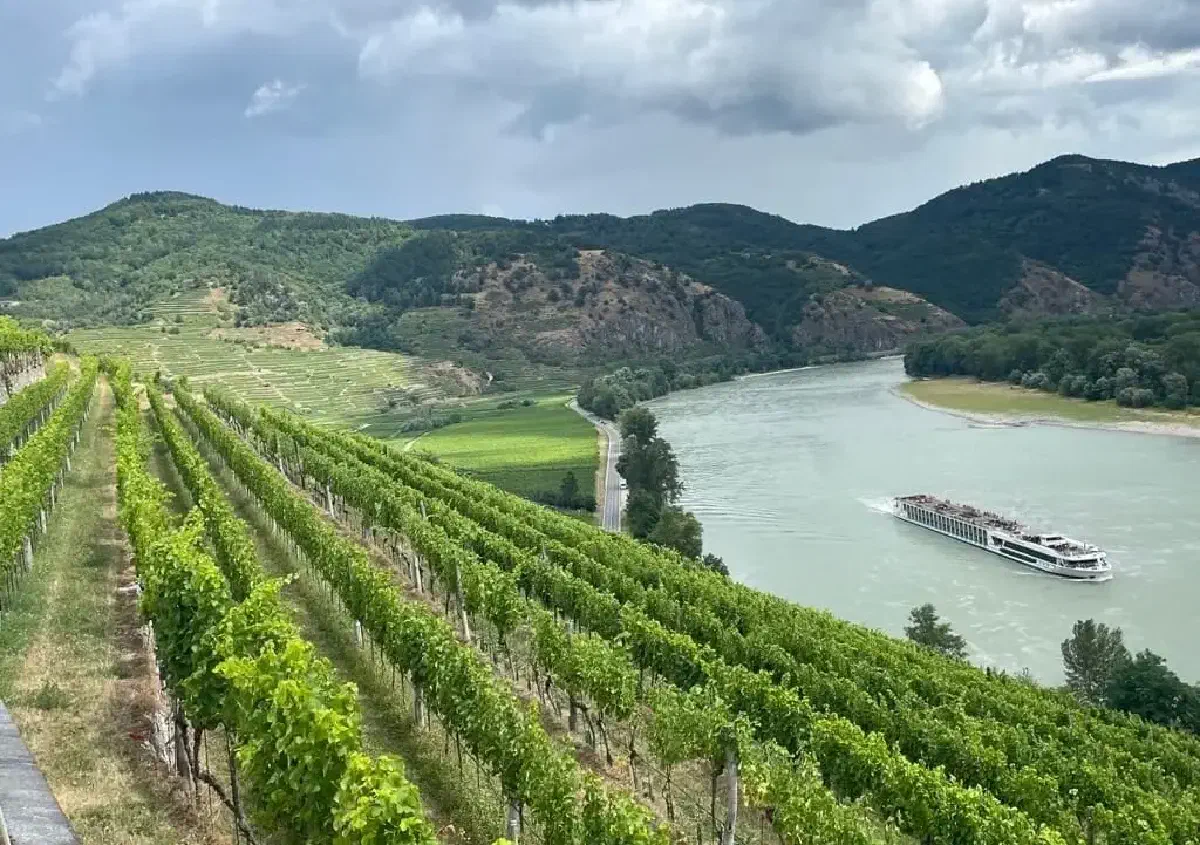
The Wachau is my number-one pick, and it is not close. This 30-kilometre stretch of the Danube between Melk and Krems is a UNESCO World Heritage Site, and it looks exactly as good in person as it does in photos — terraced vineyards, ruined castles, and apricot orchards climbing up from the river.
The classic route: take the morning train from Wien Westbahnhof to Melk (about 1 hour), visit Melk Abbey (EUR 14.50, absolutely worth it — the library alone justifies the trip), then catch the DDSG or Brandner boat downstream to Dürnstein (about 1.5 hours on the water, EUR 22–29 one-way). Dürnstein is the village with the blue church tower and the ruined castle where Richard the Lionheart was imprisoned. Walk up to the ruins for a free panoramic view.
From Dürnstein, continue by boat or bus to Krems, then train back to Vienna (1 hour direct).
What to eat: Stop at a Heuriger (wine tavern) in Dürnstein or Weissenkirchen. Order Grüner Veltliner by the glass (EUR 3–5) and a plate of cold cuts with bread.
If you prefer a guided experience with transport included, this is the one day trip where it genuinely makes sense. The logistics of train-boat-train can be tricky on your first try.
Wachau Valley Day Trip
Guided full-day trip from Vienna through the UNESCO-listed Wachau Valley, covering Melk Abbey, a scenic Danube boat ride, and wine tasting in Dürnstein. Transport included.
2. Salzburg#
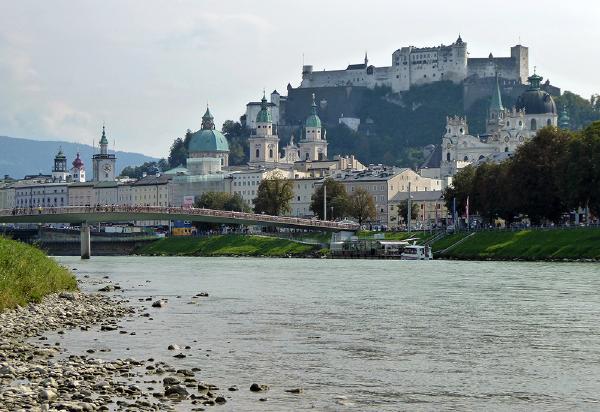
Can you really do Salzburg in a single day from Vienna? Yes, comfortably. The Westbahn or ÖBB Railjet gets you there in 2 hours 20 minutes, with trains every 30 minutes.
Start at the Festung Hohensalzburg (the fortress on the hill). Take the funicular up, walk the ramparts, and get the best view from the terrace. Entry plus funicular is EUR 16.30. Walk down through the Old Town: Getreidegasse (Mozart’s birthplace at #9, EUR 14), the Salzburg Cathedral (free), and the Mirabell Gardens (free — yes, Sound of Music fans, this is the “Do-Re-Mi” fountain).
You will have time for lunch, a stroll along the Salzach, and coffee before catching the 17:00 or 18:00 return train.
Salzburg Day Trip from Vienna
Guided day trip from Vienna to Salzburg covering the Festung Hohensalzburg fortress, Mozart’s birthplace, the Old Town, and the Mirabell Gardens. Train transport and entrance fees typically included.
3. Bratislava#
Bratislava is the most underrated day trip from Vienna, and I will keep saying it until people listen. One hour by train, absurdly cheap once you arrive, and a genuinely charming Old Town that most visitors do not expect.
Take the ÖBB train from Wien Hauptbahnhof — departures roughly every hour, EUR 10–16 return if booked in advance. RegioJet is even cheaper at EUR 5–9 each way. You arrive at Bratislava Hlavná Stanica, a 15-minute walk from the centre.
Walk the Old Town, visit Bratislava Castle (free grounds, EUR 10 for the museum), find the quirky street statues (Čumil, the man peeking from a manhole, is the most photographed), and eat lunch for EUR 8–12 per person including beer. Compare that to Vienna prices and you will understand why locals cross the border regularly.
What to eat: Try bryndzové halušky (potato dumplings with sheep cheese and bacon). It is Slovakia’s national dish and it costs about EUR 7 in the Old Town.
No guided tour needed here. This is a DIY trip through and through.
4. Hallstatt#
I need to be honest about Hallstatt because most travel blogs are not. Is it beautiful? Absolutely — the lakeside setting is as dramatic as the photos suggest. Is it worth 3.5–4 hours each way? That depends on your tolerance for crowds.
Hallstatt gets roughly 10,000 visitors per day in peak season, and the village is tiny. The salt mine tour (EUR 40, about 2.5 hours including the funicular) is interesting but not essential. The Skywalk viewing platform is the highlight, included with the salt mine ticket.
The train goes from Wien Hauptbahnhof to Hallstatt station (change at Attnang-Puchheim). The last stretch involves a ferry across the lake — actually the most beautiful part of the trip.
My honest take: If you have three or more days in Vienna and this is a bucket-list stop, go. If time is limited, the Wachau or Salzburg give you a better return on your day. Hallstatt in the off-season (November–March, excluding holidays) is quieter, misty, and genuinely atmospheric.
Hallstatt Day Trip from Vienna
Guided day trip from Vienna to Hallstatt, including the dramatic lakeside village, the salt mine, and the Skywalk viewing platform. Transport and logistics handled so you can focus on the scenery.
5. Baden bei Wien#
Baden is the closest trip on this list and one of the most relaxing. It is just 30 minutes south of Vienna on the Badner Bahn (tram line 360 from the Opera) or a regional train from Wien Meidling.
This is where Beethoven spent multiple summers — you can visit his apartment at Rathausgasse 10 (EUR 5). The town has been a spa destination since Roman times, and the thermal baths at Römertherme (EUR 17.40 for a 3-hour pass) are still the main attraction. The Kurpark is a beautiful public garden, and the surrounding hills are covered in vineyards.
Walk up to the Calvarienberg for a view over the town, then finish with a glass of Rotgipfler (the local white wine grape you will not find many other places) at a Heuriger in the wine quarter south of the centre.
6. Semmering#
If you want mountains and fresh air without driving, Semmering is your answer. The Semmering Railway is a UNESCO World Heritage Site — the first mountain railway in Europe, built in the 1850s. The train ride itself is part of the experience, with viaducts, tunnels, and alpine views the whole way.
From Wien Hauptbahnhof, the train takes about 1.5 hours. Get off at Semmering station and you are immediately in hiking territory. The 20-Schilling-Blick trail (named after the old banknote that featured this view) is a well-marked 1.5-hour loop with panoramic views of the railway viaducts below. For a longer hike, climb to the Sonnwendstein summit (1,523 m, about 3 hours round trip from the station). Semmering is best from May to October when the hiking trails are clear.
7. Krems an der Donau#
Krems is where the Wachau Valley officially begins, and it works as a standalone day trip — especially if you prefer art and wine over the full Melk-to-Dürnstein boat route.
The direct train from Wien Franz-Josefs-Bahnhof takes about 1 hour. Walk the Kunstmeile Krems (Art Mile): the Kunsthalle, the Karikaturmuseum, and the Landesgalerie Niederösterreich. The Landesgalerie building alone is worth seeing — sharp modern design in a town of baroque facades.
In the afternoon, cross to the neighbouring wine village of Stein and stop at a Heuriger. The vineyards start directly behind the town.
8. Eisenstadt#
Eisenstadt is the capital of Burgenland and the kind of small Austrian town most tourists never hear about. That is exactly why I like it.
The main draw is Esterhazy Palace (Schloss Esterhazy), where Joseph Haydn worked for decades as court composer. The palace tour (EUR 15) includes the Haydnsaal — one of the best-preserved baroque concert halls in Europe. They still hold concerts there.
Eisenstadt sits at the edge of the Neusiedler See, a steppe lake surrounded by vineyards. If you have time, take the bus (20 minutes) to Rust, a village famous for sweet Ausbruch wine and storks nesting on chimneys.
9. Carnuntum#
Carnuntum is the most underrated trip on this list. About 40 km east of Vienna, this was once a Roman city of 50,000 people on the Danube frontier. Marcus Aurelius wrote parts of his Meditations here. Today it is an open-air archaeological park with fully reconstructed Roman buildings, including a functioning bath heated the original way.
Take the S7 train from Wien Hauptbahnhof to Petronell-Carnuntum (about 45 minutes), then walk 10 minutes to the park entrance. The combined ticket for the Open Air Museum, the Amphitheatre, and the Museum Carnuntinum costs EUR 13.
The reconstructed Roman City Quarter is what sets Carnuntum apart. These are not foundations you squint at — they are full-size buildings with frescoed walls and heated floors. Kids love it, and adults who think they do not care about Roman history end up spending three hours here.
10. Graz#
Graz is Austria’s second-largest city, a UNESCO World Heritage centre, and the country’s self-proclaimed culinary capital. It earns that title.
The ÖBB Railjet gets you there in 2 hours 35 minutes from Wien Hauptbahnhof. Walk to the Schlossberg — the hill in the centre — and either take the glass lift (EUR 2.50) or climb the 260 steps. The clock tower at the top is the city’s landmark. Walk down through the Altstadt, see the Kunsthaus (the biomorphic “friendly alien” art museum — love it or hate it, you cannot ignore it), and cross the Murinsel floating platform in the river.
For lunch, head to the Kaiser-Josef-Markt or book a table at Der Steirer for modern Styrian cooking. Styrian pumpkin seed oil (Kürbiskernöl) goes on everything here, and it should.
How to Choose Your Day Trip#
Not sure which trip to pick? Here is my quick decision guide:
- Limited time (half day)? → Baden bei Wien or Carnuntum. Both are under an hour from the city centre.
- Wine lover? → Wachau Valley, no question. Krems is the lighter alternative.
- Culture and history? → Salzburg for music and architecture, Carnuntum for ancient history.
- Nature and hiking? → Semmering for mountain trails and alpine air.
- Tight budget? → Bratislava. Cheap to get to, cheap once you arrive.
- Bucket-list photo? → Hallstatt — but go early and expect crowds.
- Foodie? → Graz. Better food scene than its reputation suggests.
If you only have time for one day trip during your Vienna visit, pick the Wachau Valley. It combines scenery, history, wine, and a boat ride in a way that nothing else on this list quite matches.
Practical Tips for Day Trips from Vienna#
Train Tickets: How to Save Money#
All of these trips run on ÖBB (Austrian Federal Railways) trains. The single most important tip: buy Sparschiene tickets in advance. These discount fares cut your cost by 50–70% compared to buying at the station.
- Sparschiene fares are available from EUR 9.90 one-way on longer routes (Salzburg, Graz). They go on sale about 6 months in advance.
- Einfach-Raus-Ticket (EUR 23.90 for 2–5 people): a group day ticket for all regional trains in Austria. If you are travelling with 3+ people, this is often cheaper than individual tickets. Catch: it only works on slow regional trains (REX/R), not Railjets.
- VORteilscard Classic (EUR 66/year): gives you 50% off all ÖBB tickets. Worth it if you are taking three or more day trips during your stay.
Guided Tours vs. DIY#
Most of these trips are easy to do independently. The two where a guided tour adds genuine value:
- Wachau Valley — the train/boat logistics are confusing on your first try and a tour handles the timetable juggling.
- Hallstatt — the early start and tight schedule are easier when someone else is driving.
For everywhere else, save your money and go DIY. More freedom, less cost.
When to Go#
- Spring (April–May): Best for Wachau (apricot blossoms) and Semmering (wildflowers).
- Summer (June–August): Peak season everywhere. Hallstatt and Salzburg are packed.
- Autumn (September–October): Wine harvest in Wachau, Burgenland, and Baden. My favourite season.
- Winter (November–March): Salzburg Christmas markets are magical. Most other trips are quieter and just as enjoyable.
FAQ#
What is the best day trip from Vienna?#
The Wachau Valley. It has the best combination of scenery, culture (Melk Abbey), and food (wine, apricot dumplings) of any day trip within two hours of the city. If you are more interested in a city break, Salzburg is the top pick.
Can you do Hallstatt as a day trip from Vienna?#
Yes, but it is a long day. The train takes 3.5–4 hours each way, so you need to leave by 6:30 and you will not be back before 20:00. It is doable but tiring. I recommend it only if Hallstatt is high on your priority list. Otherwise, spend that day on a closer trip like the Wachau or Salzburg.
How do I get cheap train tickets in Austria?#
Book Sparschiene (discounted) fares on oebb.at at least 3–5 days before travel. Prices start at EUR 9.90 one-way for longer routes. For groups of 2–5, the Einfach-Raus-Ticket (EUR 23.90 total) covers unlimited regional train travel for a day. Also check RegioJet for the Bratislava route — their fares are consistently cheaper than ÖBB.
Is Bratislava worth a day trip?#
Absolutely. One hour, cheap trains, walkable centre, and food at half Vienna prices. It will not take your breath away the way the Wachau or Salzburg might, but it is fun, low-effort, and surprisingly charming.
Can you do Salzburg as a day trip from Vienna?#
Yes. The train takes 2 hours 20 minutes. Leave by 8:00 and you get seven to eight hours in the city before an evening return. Book Sparschiene tickets in advance for under EUR 30 round trip.
What is the cheapest day trip from Vienna in 2026?#
Baden bei Wien wins on pure cost: the Badner Bahn tram from beside the Vienna Opera costs just EUR 3.10 each way and departs every 15 minutes. Once there, the Römertherme thermal baths cost EUR 17.40 for a 3-hour pass and the Kurpark is free. For the cheapest international escape, Bratislava takes the prize — RegioJet fares run EUR 5-9 each way, and once you arrive, a full meal with beer in the Old Town costs EUR 8-12. A day in Bratislava costs less than a single museum ticket in Vienna.
What is the best day trip from Vienna for families in 2026?#
Carnuntum (40 km east by S7 train from Wien Hauptbahnhof, about 45 minutes) is the top pick for families. Unlike most Roman sites where you stare at foundations, Carnuntum has fully reconstructed buildings with heated floors and frescoed walls that kids can walk through and touch. The combined park and museum ticket is EUR 13. If you visit during the annual Roman Festival in June, there are gladiator reenactments, Roman cooking demonstrations, and legionary drills. Check carnuntum.at for the 2026 festival dates.
Is the Wachau Valley worth a day trip from Vienna in 2026?#
Yes — it is the best single day trip from Vienna in 2026 and one of the finest day trips in Central Europe. The full loop combines a morning train to Melk (about 1 hour, EUR 12-15 one-way), a visit to Melk Abbey (EUR 14.50), a 1.5-hour boat ride downstream to Dürnstein (EUR 22-29), a walk up to the ruined castle, and a return train from Krems back to Vienna (1 hour). Add wine tasting at a Heuriger in Dürnstein or Weissenkirchen and you have scenery, history, a boat ride, a castle, and local Grüner Veltliner all in one day. Book the Brandner or DDSG boat online in advance during June-August.
Conclusion#
Vienna is a fantastic base for day trips — the rail connections are fast, the distances are short, and the variety is hard to beat anywhere in Central Europe. Whether you want wine country, Alpine scenery, Roman ruins, or a quick hop to another capital, you can do it and be back for dinner.
If this is your first time in Vienna, make sure you have the city covered first. Check my 25 best things to do in Vienna for the full breakdown, or use my 3-day Vienna itinerary to plan your in-city days. Travelling on a budget? My Vienna on a budget guide covers how to see the city without overspending — and the cheaper day trips above (Baden, Carnuntum, Bratislava) fit perfectly into a budget itinerary.