Introduction#
If you’re looking for the best coffee houses in Vienna, you need to understand something first: a Viennese Kaffeehaus is not a café. It’s not a place you pop into for a quick flat white. It’s a civic institution. In 2011, UNESCO added Viennese coffee house culture to its Intangible Cultural Heritage list — and for good reason. The tradition goes back over 300 years, and it hasn’t changed much.
The concept is simple. You walk in, sit down, order a Melange, and stay as long as you want. Two hours, four hours, the whole afternoon. Nobody will rush you, nobody will side-eye you for nursing a single coffee. The waiter (always called Herr Ober, never anything else) will bring your coffee on a small silver tray with a glass of water on the side. You read the newspapers — every proper Kaffeehaus has a wooden rack of them. You watch people. You stare out the window. The Viennese call it their “extended living room,” and they mean it literally.
I go to Café Sperl most Sundays. I’ve been doing it for years. I sit in the same corner, read the same newspaper rack, eat the same Apfelstrudel. The waiter knows my order. This is what Vienna coffee house culture is about — routine, slowness, and a stubborn refusal to hurry. The 12 coffee houses below are the ones actually worth your time, organized by what kind of experience you’re after.
Vienna Coffee Menu Decoder#
Before you sit down anywhere, learn the menu. Ordering a “latte” in a traditional Kaffeehaus will get you a look. Here’s what you actually want:
| Coffee Name | What It Is | Price Range |
|---|---|---|
| Melange | Vienna’s cappuccino — espresso with steamed milk and foam | EUR 4.50–6.00 |
| Kleiner Brauner | Single espresso with a small jug of cream on the side | EUR 3.50–4.50 |
| Großer Brauner | Double espresso with cream on the side | EUR 4.00–5.00 |
| Einspänner | Espresso in a glass topped with a big dome of whipped cream | EUR 5.00–6.00 |
| Verlängerter | Diluted espresso, closest thing to an Americano | EUR 3.50–5.00 |
| Wiener Eiskaffee | Cold coffee with vanilla ice cream and whipped cream — a full dessert | EUR 7.00–8.00 |
| Fiaker | Espresso with a shot of rum and whipped cream | EUR 7.00–8.00 |
Grand & Historic Coffee Houses#
These are the famous ones. They’re in every guidebook, they draw crowds, and yes, they still deserve a visit. The architecture alone is worth it.
1. Café Central#
Address: Herrengasse 14, 1st District (Innere Stadt) Nearest U-Bahn: Herrengasse (U3) Hours: Mon–Sat 8:00–22:00, Sun 10:00–22:00 Website: cafecentral.wien
Café Central is the most famous coffee house in Vienna, and it earns that status. The vaulted ceilings, the marble columns, the grand arched windows — it looks like a cathedral that decided to serve pastries. Trotsky played chess here. Freud drank here. Peter Altenberg practically lived here (his life-size figure still sits by the entrance).
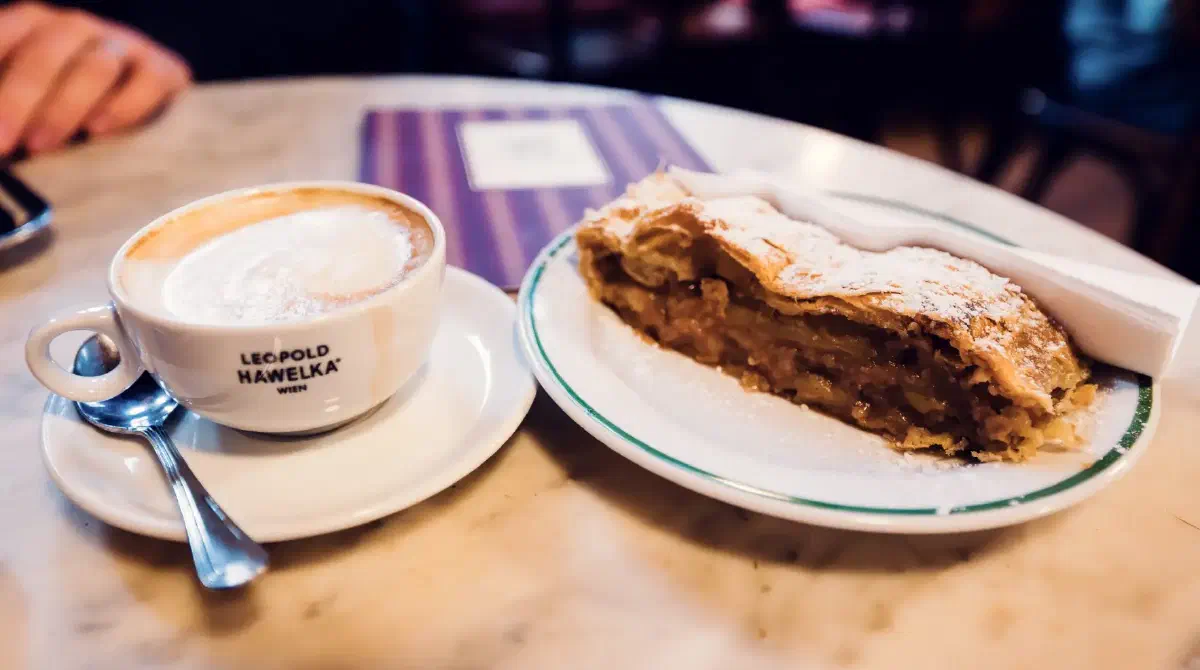
The coffee is solid, the Apfelstrudel is very good, and there’s live piano from around 17:00 daily. The problem: everyone knows about it. By 11:00 on any summer day, the line stretches down Herrengasse.
Must-order: Melange + Apfelstrudel (about EUR 13 combined). The strudel is made in-house and comes warm with vanilla sauce.
2. Café Sacher#
Address: Philharmonikerstraße 4, 1st District (behind the Opera) Nearest U-Bahn: Karlsplatz (U1, U2, U4) Hours: Daily 8:00–24:00 Website: sacher.com
You come here for one reason: the Original Sachertorte (EUR 8.90 per slice). It’s the most famous cake in Austria, invented in 1832 by Franz Sacher for Prince Metternich. The recipe is a guarded secret. Every slice arrives with an official chocolate seal on top and a side of unsweetened whipped cream.
Here’s my honest take: the Sachertorte is a bit dry. It’s dense, very chocolatey, and the apricot jam layer adds some moisture, but it’s not the best cake you’ll eat in Vienna. That said, it’s iconic. You eat it once, you tell people you ate it, you move on. The ambiance in the red-velvet dining room is the real draw — it feels like you’ve stepped into 1870.
The Demel vs. Sacher debate: Both claim to sell the “original” Sachertorte. They went to court over it in 1963. Sacher won the right to call theirs “The Original.” Demel’s version is slightly different (the jam goes under the chocolate icing rather than in the middle). Try both and pick a side. Most Viennese I know quietly prefer Demel’s.
3. Demel#
Address: Kohlmarkt 14, 1st District Nearest U-Bahn: Herrengasse (U3) Hours: Daily 8:00–19:00 Website: demel.com
Demel was the imperial confectioner — the official cake supplier to the Habsburg court. The building on Kohlmarkt is stunning, the window displays change seasonally and are genuine works of art (stop and look even if you don’t go in), and the pastry selection puts every other coffee house on this list to shame.
This is where I send people who want the best cake in Vienna, full stop. Skip the Sachertorte debate and order whatever seasonal torte they’re featuring. The Esterhazy Torte is exceptional. The petit fours are beautiful. And unlike Sacher, the cakes here are moist, layered, and genuinely delicious.
The atmosphere is more formal than Central — staff address you in the third person (“Hat die Dame schon gewählt?” — “Has the lady chosen?”). It’s a bit stiff, but it’s part of the experience.
Must-order: Demel’s Sachertorte or any seasonal torte. The Cremeschnitte (cream slice) is also outstanding.
4. Café Landtmann#
Address: Universitätsring 4, 1st District (next to the Burgtheater) Nearest U-Bahn: Rathaus (U2) Hours: Daily 7:30–22:00 Website: landtmann.at
Landtmann is where Vienna’s politicians, journalists, and theater crowd go. Its terrace faces the Burgtheater and the Rathaus, which makes it one of the best outdoor seats in the city. Sigmund Freud was a regular, and during parliamentary sessions you’ll spot Austrian MPs having lunch here.
It doesn’t get the same tourist crush as Central, which means you can usually get a table without waiting. The breakfast menu is excellent — the Landtmann Frühstück (house breakfast) with eggs, ham, cheese, bread, butter, jam, and coffee runs about EUR 16 and is big enough to keep you going until mid-afternoon.
Authentic Local Favorites#
These are the coffee houses where Viennese people actually spend their time. Less polished, more character, and significantly cheaper.
5. Café Hawelka#
Address: Dorotheergasse 6, 1st District Nearest U-Bahn: Stephansplatz (U1, U3) Hours: Mon–Sat 8:00–24:00, Sun 10:00–24:00
Hawelka has no website. It has no Instagram. It barely has signage. The interior is dark, cramped, the upholstery is worn, and the tables are too close together. It’s perfect.
Leopold and Josefine Hawelka opened this place in 1939 and it became the hangout for Vienna’s artists, writers, and intellectuals in the post-war decades. The couple ran it together until their deaths (Leopold in 2011 at age 100). Their family still runs it today, and they haven’t changed a thing. The walls are covered in art that regulars left behind over the decades.
The famous item here is the Buchteln — sweet yeast dumplings filled with plum jam, dusted with powdered sugar. They’re made fresh every evening and served after 22:00. If you’re in Vienna for just one night, come here at 22:30, order Buchteln and a Melange, and sit in the glow of this place.
Must-order: Buchteln (EUR 5.50, served after 22:00 only). During the day, a Melange and people-watching.
6. Café Sperl#
Address: Gumpendorfer Straße 11, 6th District (Mariahilf) Nearest U-Bahn: Museumsquartier (U2) Hours: Mon–Sat 7:00–23:00, Sun 11:00–20:00 (closed Sun in July/Aug) Website: cafesperl.at
Sperl is my regular. I’m biased. But I also think it’s the best all-around coffee house in Vienna.
It opened in 1880 and the interior is virtually unchanged — green velvet banquettes, dark wood paneling, billiard tables in the back room, marble-topped tables, and a newspaper rack that still carries a dozen dailies. On any given afternoon you’ll find retired professors reading, students studying, locals playing billiards, and maybe a film crew (it’s been used in several movies, including Before Sunrise).
The Apfelstrudel here is among the best in the city. The Sperl Torte (a chocolate-almond creation specific to this house) is worth trying. And because it’s in the 6th District rather than the 1st, you get a fraction of the tourist traffic.
Must-order: Apfelstrudel with vanilla sauce (EUR 6.50) and a Großer Brauner.
7. Café Prückel#
Address: Stubenring 24, 1st District (across from MAK museum) Nearest U-Bahn: Stubentor (U3) Hours: Daily 8:30–22:00 Website: prueckel.at
Prückel sits right on the Ringstraße overlooking the MAK (Museum of Applied Arts), and the interior hasn’t been updated since the 1950s. That’s a compliment. The Formica tables, the curved booth seating, the strip lighting — it’s mid-century Vienna frozen in time.
There’s live piano on Monday, Wednesday, and Friday evenings (19:00–22:00, no cover charge). The crowd is older, local, and very loyal. If you’re visiting MAK, you eat lunch or have coffee at Prückel afterward. That’s the done thing.
The cakes are solid without being spectacular. The coffee is reliable. What you come for is the room itself and the feeling of sitting in a place that hasn’t been sanitized for tourists.
Must-order: Melange and a slice of Gugelhupf (EUR 4.80).
8. Café Korb#
Address: Brandstätte 9, 1st District Nearest U-Bahn: Stephansplatz (U1, U3) Hours: Mon–Sat 8:00–24:00, Sun 10:00–23:00 Website: cafekorb.at
Korb is the intellectual’s coffee house. The owner, Susanne Widl, is an artist herself, and the basement hosts rotating art exhibitions and events. Upstairs, you’ll find chess players hunched over boards, people reading thick novels, and a general atmosphere of “leave me alone, I’m thinking.”
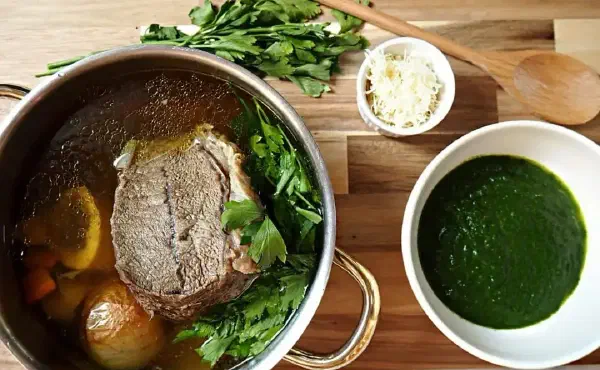
The lunch menu is surprisingly good — the Tafelspitz (boiled beef with horseradish sauce) is well-made and about EUR 15. The space feels less self-conscious than Hawelka, more relaxed than Central, and genuinely welcoming.
Must-order: Coffee and a Topfenstrudel (curd cheese strudel, EUR 5.80). For lunch, the daily special is always reliable.
Modern & Specialty Coffee#
If you actually care about how your coffee tastes — bean origin, roast profile, extraction — these are your places. They break from tradition, and purists will tell you they’re not “real” Kaffeehäuser. They’re right. But the coffee is better.
9. Kaffeemodul#
Address: Josefstädter Straße 32 (entrance on Lange Gasse), 8th District Nearest U-Bahn: Rathaus (U2) or Josefstädter Straße (Tram 2, 5) Hours: Mon–Fri 8:00–18:00, Sat 9:00–14:00
This is a small room with a bar, a few stools, and an espresso machine. That’s it. No Sachertorte, no marble columns, no chandeliers. What Kaffeemodul does have is the best espresso in Vienna.
They roast their own beans, they change the single-origin regularly, and every shot is pulled with precision. If you’ve been drinking Melange all week and want something that would hold up in Melbourne or Tokyo, come here. A single espresso costs around EUR 3.00 and it’s worth every cent.
10. Kaffeefabrik#
Address: Favoritenstraße 4, 4th District (Wieden) Nearest U-Bahn: Karlsplatz (U1, U2, U4) Hours: Mon–Fri 8:00–18:00, Sat 9:00–17:00 Website: kaffeefabrik.at
Kaffeefabrik is a small specialty roaster with a cafe attached. They do pour-over, AeroPress, batch brew, and proper latte art. The space is warm and unpretentious — exposed brick, wooden tables, a small retail shelf of beans.
If you want to buy beans to take home, this is a strong choice. They roast in small batches and the staff can talk you through every origin they carry. A filter coffee runs about EUR 4.00.
Must-order: Whatever single-origin they’re featuring on pour-over.
11. Jonas Reindl Coffee Roasters#
Address: Währinger Straße 2, 9th District (Alsergrund) Nearest U-Bahn: Schottentor (U2) Hours: Mon–Fri 8:00–18:00, Sat 9:00–17:00 Website: jonasreindl.at
The name is a deep-cut Vienna reference — “Jonas Reindl” is old Viennese slang for a double espresso, named after a round pot (Reindl) used in Austrian cooking. If a local says “I’ll have a Jonas Reindl,” they mean a strong double shot.
The cafe sits near the university and draws a younger, student-heavy crowd. The beans are excellent, the flat whites are properly made, and they have a good range of bags to buy. It’s also just a nice room to work in for an hour.
Must-order: Flat white or a bag of their seasonal blend to take home (EUR 12–16 for 250g).
12. CaffeCouture#
Address: Garnisongasse 18, 9th District (near the university) Nearest U-Bahn: Schottentor (U2) Hours: Mon–Fri 8:30–18:00, Sat 9:00–15:00
CaffeCouture is for coffee nerds. They take single-origin beans seriously, they brew with scales and timers, and they’ll happily spend five minutes telling you about the processing method of their current Ethiopian lot. It’s precise without being snobby.
The space is small and minimal. No pastries, no strudel, no frills. Just very good coffee in a focused environment. An espresso costs about EUR 3.50, filter around EUR 4.50.
Must-order: Ask the barista what they’d drink today. They always have an opinion.
Coffee House Tour Option#
If you’re visiting Vienna for the first time and want a guided introduction to Kaffeehaus culture, a coffee house walking tour is a smart way to hit several spots in one afternoon with local context you wouldn’t get on your own.
A typical tour covers 2–3 historic coffee houses, includes tastings (usually a Melange and a pastry at each stop), and lasts about 2.5–3 hours. The guide explains the history, the coffee menu, the etiquette, and the differences between each house. It’s a good crash course before you explore on your own.
Vienna Coffee House Tour
Guided 2.5–3 hour afternoon tour covering 2–3 historic Kaffeehäuser, with tastings (a Melange and pastry at each stop) and a local guide explaining etiquette, history, and the differences between each house.
Coffee House Etiquette#
A few things that will help you not look like a tourist:
- You can stay as long as you want. One Melange buys you a seat for the afternoon. This is the entire point. Nobody will pressure you to leave or order more.
- Tipping: Round up to the nearest euro on small orders. For a full meal, 5–10% is standard. If the Herr Ober has been particularly attentive, 10%.
- Addressing the waiter: “Herr Ober” for a male waiter, “Frau Ober” for a female one. Raising your hand slightly works. Never snap your fingers.
- Newspapers are free to read. Take one from the rack, read it, put it back. This is expected and encouraged.
- Don’t ask for a to-go cup at a traditional Kaffeehaus. It defeats the entire philosophy. If you need coffee to-go, use a modern cafe or a bakery.
- The glass of water that comes with your coffee is standard, free, and automatically refilled. You don’t need to ask for it, and there’s no charge.
- Paying: The waiter keeps a running tally. When you’re ready to leave, say “Zahlen, bitte” (check, please). They’ll calculate the total at the table.
Frequently Asked Questions#
What is the most famous coffee house in Vienna?#
Café Central is the most famous, followed closely by Café Sacher. Central is famous for its architecture and literary history; Sacher is famous for the Sachertorte. Both are in the 1st District and both get crowded. If you visit only one grand coffee house, I’d choose Central for the atmosphere.
How much does coffee cost in Vienna?#
At a traditional Kaffeehaus, expect to pay EUR 4.00–6.00 for a standard coffee (Melange, Brauner, Verlängerter). Specialty drinks with whipped cream or alcohol (Einspänner, Fiaker) run EUR 5.00–8.00. At modern specialty cafes, espresso starts around EUR 3.00 and filter coffee around EUR 4.00. Compared to London or Zurich, Vienna coffee is reasonably priced.
What is a Wiener Melange?#
A Wiener Melange is Vienna’s version of a cappuccino — a single espresso topped with steamed milk and a cap of foam. It’s served in a large porcelain cup on a silver tray with a glass of water. The key difference from a standard cappuccino: the milk is steamed softer and the ratio leans more toward milk than foam. It’s smoother, less aggressive. Every traditional coffee house makes one, and it’s the default order for most Viennese.
Can you work from Viennese coffee houses?#
At traditional Kaffeehäuser — technically yes, nobody will stop you, but pulling out a laptop goes against the spirit of the place. You’ll get looks. The whole point is to disconnect. At modern specialty cafes like Jonas Reindl and Kaffeefabrik, laptops are common and nobody cares. If you need to work, use the modern spots. If you want to experience Vienna, leave the laptop at home.
What’s the difference between a Kaffeehaus and a café?#
A Kaffeehaus is a traditional Viennese institution with a specific culture: waiters in formal attire, newspapers on racks, marble tables, no rush, no takeaway. The experience is as important as the coffee. A café is any place that serves coffee. Vienna has both. Places like Central, Hawelka, and Sperl are Kaffeehäuser. Places like Kaffeemodul and CaffeCouture are cafes. Both are great — they just serve different purposes.
What is the best coffee house in Vienna for a first-time visitor in 2026?#
For first-timers in 2026, start with Café Central (Herrengasse 14) — the vaulted ceilings and marble columns are genuinely spectacular, and the Apfelstrudel (EUR 7.90) with a Melange (EUR 6.50) is the classic pairing. Arrive before 10:00 on a weekday to avoid the queues that form by 11:00. Then, for a second coffee house the same day, take the U2 to Museumsquartier and walk to Café Sperl in the 6th District for the authentic local experience without the crowds.
Is Viennese coffee house culture worth experiencing in 2026?#
Absolutely. UNESCO added Viennese coffee house culture to its Intangible Cultural Heritage list, and in 2026 it is still completely authentic — especially at places like Hawelka, Sperl, and Prückel, where the interiors and rituals have not changed in decades. A Melange costs EUR 4.50-6.00 and buys you a table for the entire afternoon with no pressure to leave or order more. It is one of the most civilized and affordable pleasures in Europe, and unlike most “cultural experiences,” it needs no booking, no ticket, and no guided tour.
What is the best coffee house in Vienna for specialty coffee in 2026?#
For precision specialty coffee in 2026, Kaffeemodul (Josefstädter Straße 32, 8th District) is the top pick — they roast their own beans and pull espresso shots that would hold up in any world-class coffee city, with a single shot costing around EUR 3.00. Kaffeefabrik (Favoritenstraße 4, 4th District) is the best option if you want to buy quality beans to take home. Jonas Reindl Coffee Roasters near Schottentor is ideal if you need to sit and work while drinking excellent filter coffee (EUR 4.00).
Final Thoughts#
Twelve coffee houses, and I haven’t even covered all the ones worth visiting. Vienna has dozens more. But these twelve give you the full range — from marble-and-chandelier grandeur to standing-room espresso bars, from 1880s billiard rooms to single-origin pour-overs.
My advice: visit at least one grand Kaffeehaus (Central or Landtmann), at least one local favorite (Sperl or Hawelka), and at least one specialty spot (Kaffeemodul or Kaffeefabrik). That triangle gives you the complete picture of Vienna’s coffee culture, past and present.
And if you want to go deeper into Viennese food beyond coffee, check out my full guide on where to eat in Vienna. For planning the rest of your trip, see 25 things to do in Vienna and the 3-day Vienna itinerary — which includes a dedicated coffee house morning on day two.